

In short (UK): A good complaint is written, factual, and specific: what happened, what you want, by when. Phone chats get forgotten; a clear email creates a trail for chargeback, ombudsman, or court later. Use the structure below — then let Refundly fill a tailored letter from your claim details. This is general guidance, not legal advice.
Knowing how to complain often matters more than knowing every statute by heart. This guide is a structure and checklist, not a full library of finished letters for every scenario.
Why Writing Works Better
- Creates a paper trail
- Shows you know your rights
- Sets a deadline
- Signals you can escalate
That alone often speeds things up.
Complaint Structure (Use Every Time)
- Your details — name, address, phone, email
- Company details — complaints team or named contact
- Reference — order, booking, account number
- What happened — dates and facts only
- What you want — refund amount / repair / compensation
- Deadline and next steps — often 14 days, then escalation
Skeleton Wording (Fill With Your Facts)
Keep openings short:
I am writing to make a formal complaint about [reference], from [date], for [brief description / amount].
The issue remains unresolved. I am requesting [specific remedy] under my consumer rights.
For faulty goods, name the problem in plain English (not satisfactory quality / not fit for purpose / not as described) and the remedy (e.g. full refund within 14 days). For late delivery, state the promised date and that you are ending the contract if that is your choice.
Do not paste a full multi-page legal essay. Companies respond to clear facts and a clear ask.
What to Attach
Receipt or booking; photos; listing screenshots; prior emails; tracking. Label files simply.
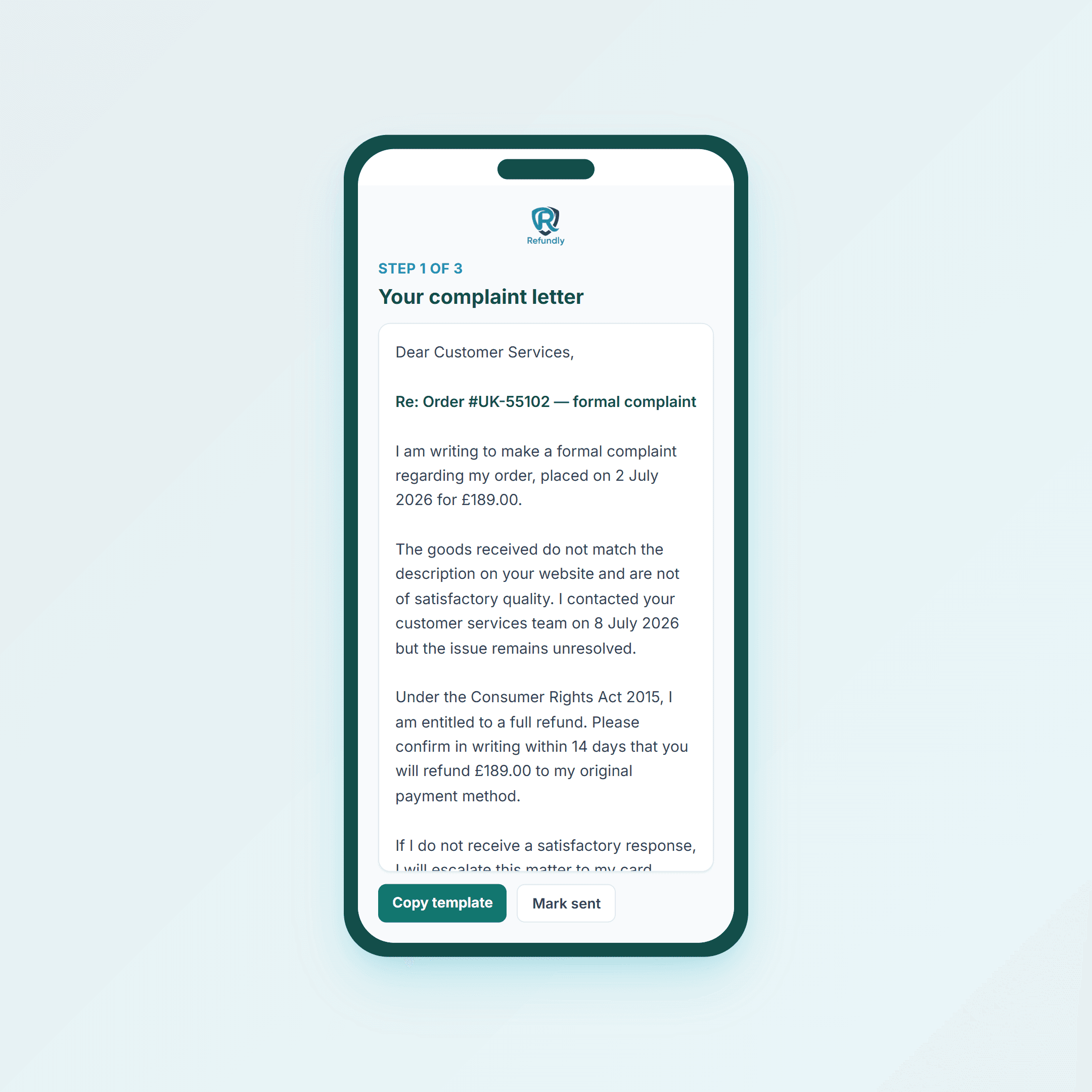 Refundly pre-fills structure from your claim so you are not starting from a blank page every time
Tone
Factual, specific, professional, confident. Insults and early threats rarely help. Calm rights + escalation route usually does.
If They Do Not Respond
| Step | When |
|---|---|
| Follow-up | No reply after your deadline |
| Chargeback | Debit/card scheme path fits |
| Section 75 | Qualifying credit-card purchase |
| ADR / ombudsman | Sector schemes (energy, telecoms, finance, rail…) |
| Small claims | Strong evidence, other routes exhausted |
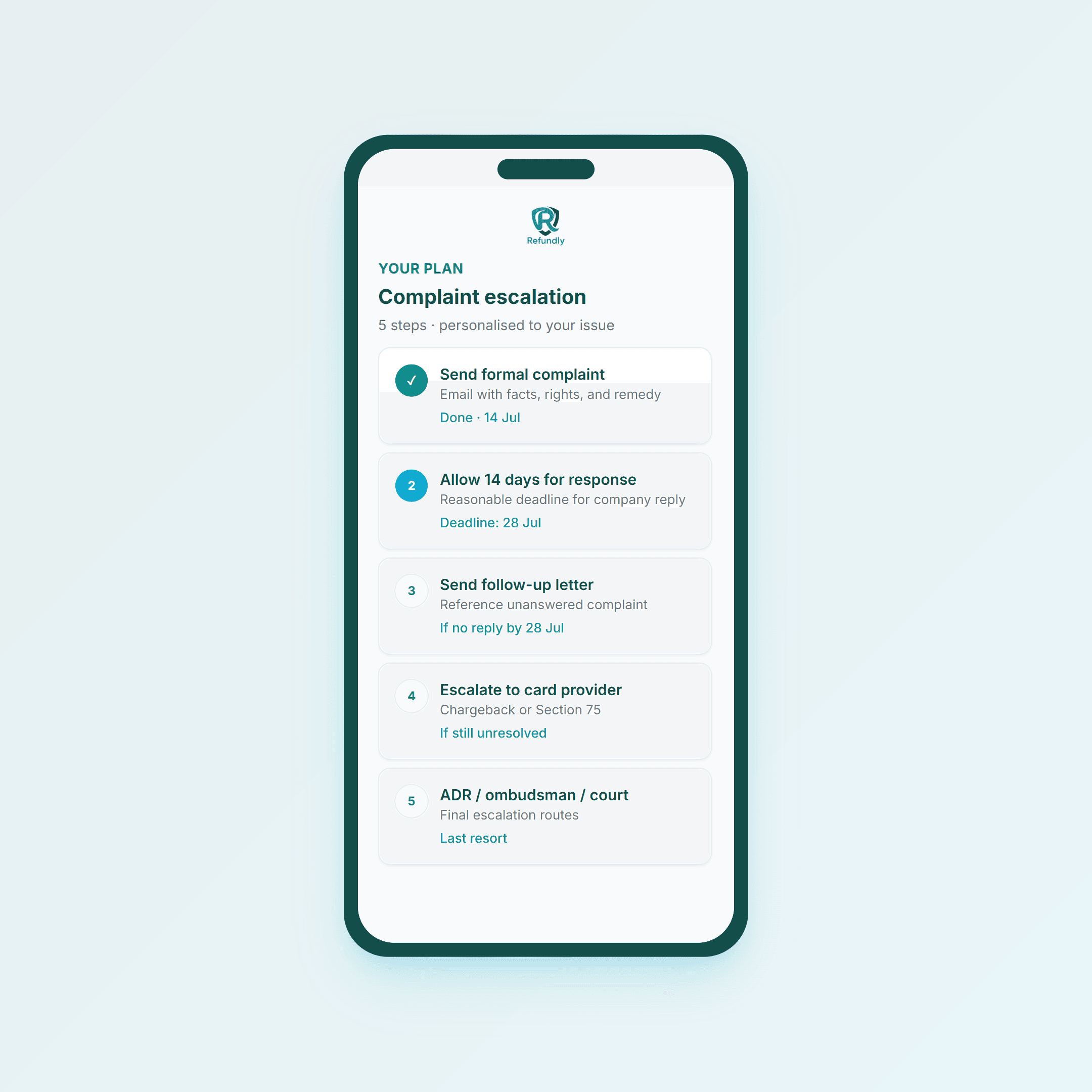 Tracking each step stops missed windows
Using Refundly to Write Your Complaint
- Choose your issue type
- See recommended remedy framing
- Generate a professional letter with your details
- Follow a plan if they do not resolve
Browse rights guidance is free; Premium unlocks the full claim toolkit.
Final Tip
Send by email and keep the sent copy. Form + email is fine — proof of wording and date is the point.
General information for UK consumers only — not legal advice. Pair this structure with issue-specific guides on the Refundly blog.
Common questions
Short answers to common questions on this topic.
- What should a UK complaint letter include?
- Your details, company details, order or account reference, a short factual timeline, the exact remedy you want, a response deadline, and that you may escalate if ignored. Attach key evidence rather than writing a novel.
- Is email as good as a letter?
- Yes for most consumer complaints — email creates a dated record. Use the company’s complaints form too if they have one, and keep a copy of exactly what you sent.
- How long should I give them to reply?
- Fourteen days is a common consumer deadline for a first formal complaint. Sector rules (energy, telecoms) may have longer formal processes before an ombudsman.
- Should I threaten court in the first line?
- Usually no. Firm, factual, rights-aware language works better. Mention escalation routes calmly at the end if they miss your deadline.
- How is Refundly different from a free template?
- This page is a structure and checklist. Refundly builds a letter from your issue, facts, and remedy, then ties it to a personalised plan and deadlines — so you are not copying a generic sample for every claim.