
In short (UK): Section 75 can make your credit card provider jointly liable with the seller for qualifying purchases (usually £100–£30,000 cash price) when goods or services are faulty, not supplied, or misdescribed. Complain to the trader first, keep evidence, then claim with your issuer. This is general guidance, not legal advice.
If a company refuses a refund, your credit card may be a powerful backup. This guide covers when Section 75 may apply — not a full claim pack. For a personalised step by step action plan, deadline reminders and pre-filled letter templates, use Refundly.
What Is Section 75?
It protects many credit-card purchases where there is a direct link between your card payment and the supplier, and the trader has broken the contract. In simple terms: if the seller will not put it right, the card company may have to help.
When It May Apply
| Scenario | May qualify? |
|---|---|
| Faulty goods, trader refuses refund | Often |
| Holiday/service cancelled or not provided | Often |
| Item never delivered | Often |
| Changed your mind only | No |
| Debit card | No — use chargeback |
| Some wallet / intermediary payments | Maybe not — check the link |
Important: The £100 floor is about the cash price of what you bought, not only the amount you put on the card.
Section 75 vs Chargeback
| Section 75 | Chargeback | |
|---|---|---|
| Card | Credit | Debit or credit |
| Legal basis | Statute | Scheme rules |
| Minimum | Usually £100 | No statutory minimum |
| Timing | Often long for the legal claim | Often ~120 days |
See chargeback UK for the debit-card path.
What to Do Next (High Level)
- Complain to the retailer and keep the paper trail.
- Gather evidence — contract, payments, faults, refusals.
- Contact your card provider and ask for their Section 75 / dispute process.
- Explain the breach clearly — what you bought, what failed, what refund you want.
- Follow up in writing if answers are vague.
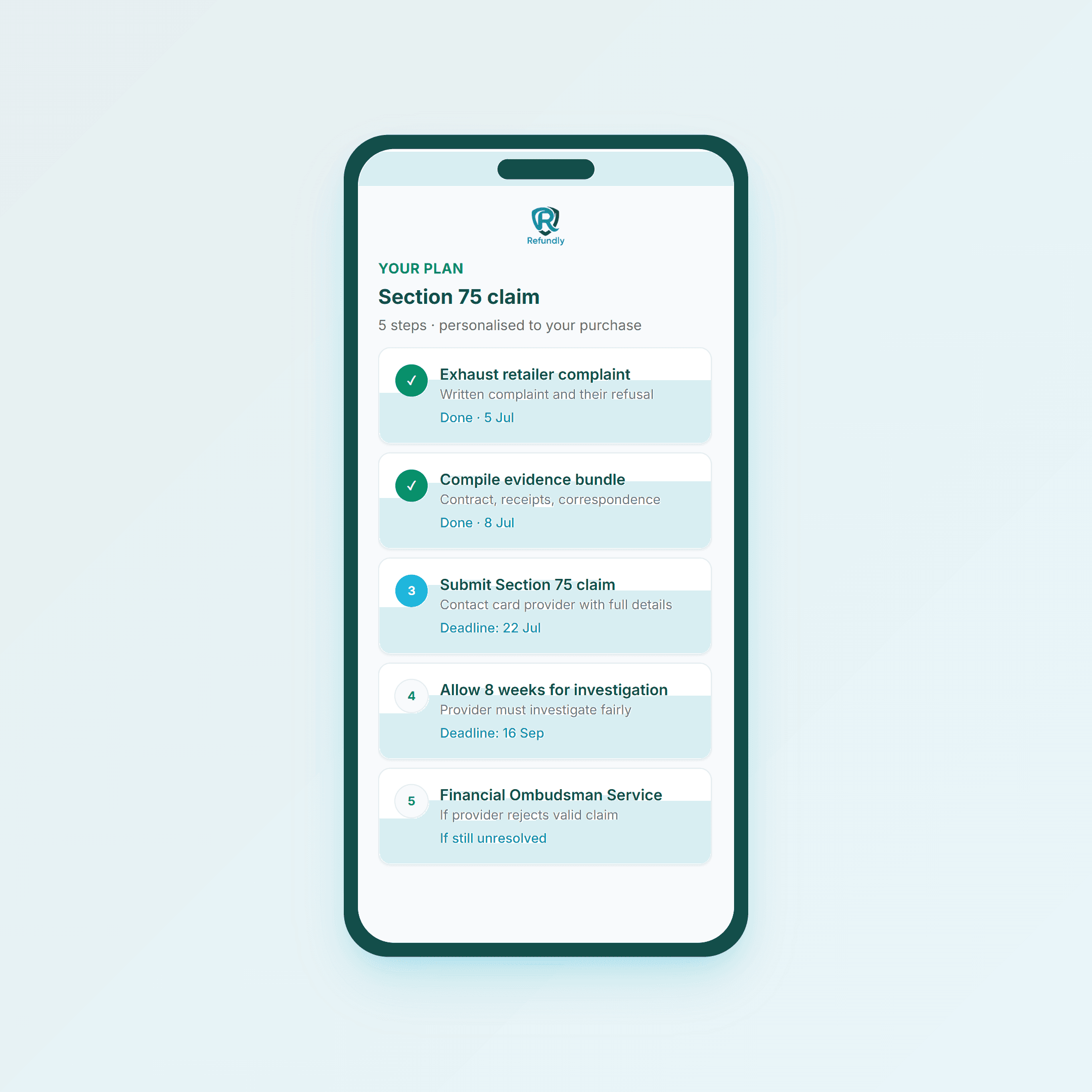 Card providers expect a clear timeline of what went wrong
Common Reasons Claims Struggle
Broken payment link via intermediaries; under £100 cash price; weak proof of breach; poor records; accepting vouchers when a refund was due.
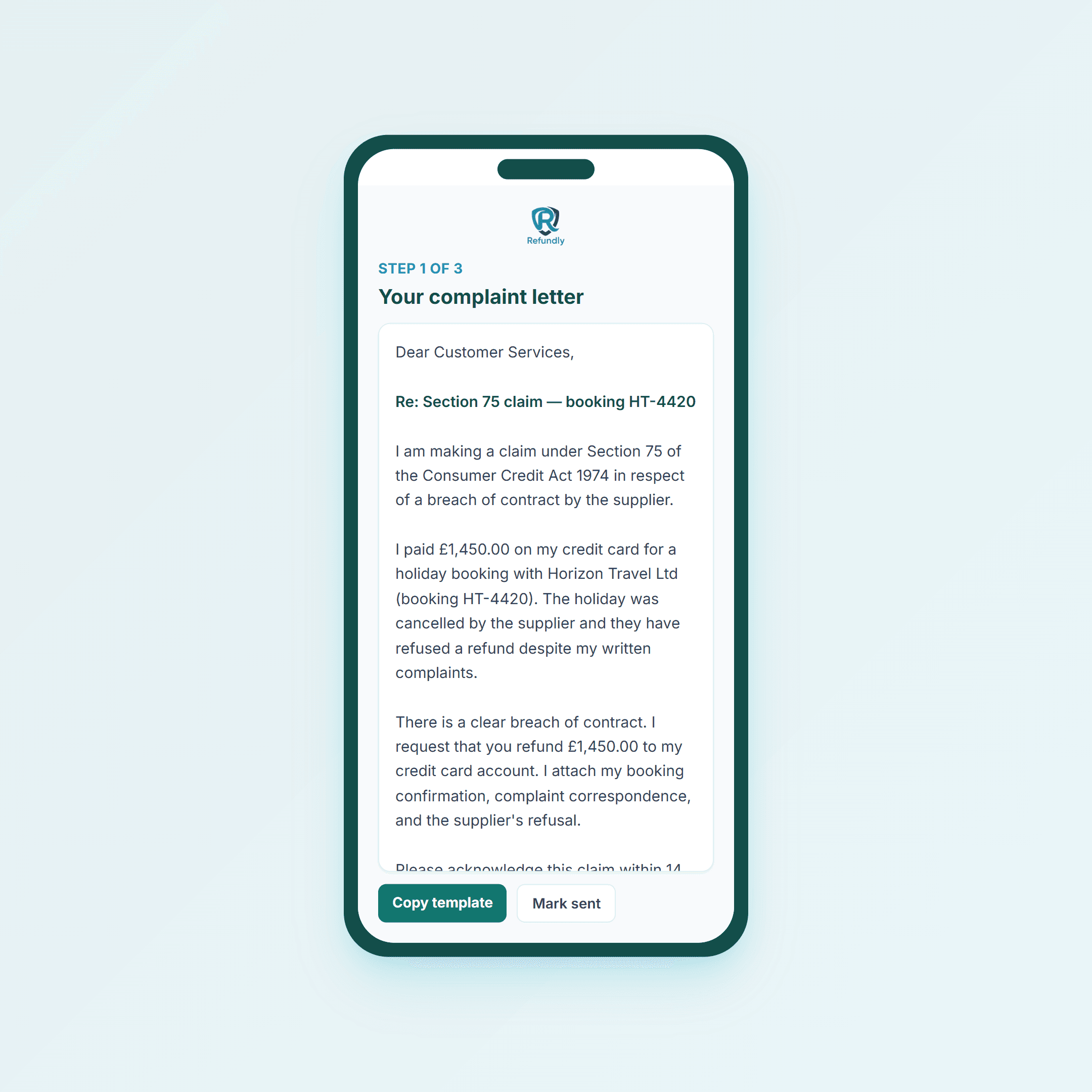 Refundly helps structure the story and evidence before you claim
If Your Bank Refuses
Ask for reasons in writing. If they mishandle a valid claim, Financial Ombudsman routes may be available — separate from proving the underlying consumer breach.
Using Refundly for Section 75 Claims
- Log issue + payment method
- See whether Section 75 is flagged for your facts
- Build timeline and evidence checklist
- Draft structured communications
- Track deadlines and export if needed
Final Tip
Paying even a deposit on credit can matter for larger purchases if the total cash price and direct-link rules are met — worth planning before big holidays and high-value goods.
General information for UK consumers only — not legal advice. See Section 75 of the Consumer Credit Act 1974.
Common questions
Short answers to common questions on this topic.
- What is Section 75?
- Section 75 of the Consumer Credit Act 1974 makes your credit card provider jointly liable with the supplier for qualifying purchases if the trader breaches the contract — for example faulty goods, non-delivery, or misdescription — and will not put it right.
- What amounts does Section 75 cover?
- Typically where the cash price of the goods or services is between £100 and £30,000. A deposit on the card can still bring a larger purchase into scope if the total price sits in that range and the direct-link rules are met.
- Does Section 75 work on debit cards?
- No. Debit cards use chargeback under scheme rules instead. Section 75 is a credit-card statutory route.
- What if I paid through PayPal or a wallet?
- Some payment setups can break the “direct link” to the supplier that Section 75 needs. Check carefully — PayPal dispute or chargeback may still be available even if Section 75 is not.
- Is Section 75 stronger than chargeback?
- Often yes for qualifying credit-card purchases: it is a legal right with longer practical windows than many chargeback schemes. Pick one primary path; do not run conflicting disputes casually.