

In short (UK): Small claims (England & Wales County Court) is a lower-cost way to pursue money you are owed — often up to £10,000 — after complaints and other routes fail. Try to settle first, send a letter before action, file online, keep evidence tight. Scotland/NI differ. This is general guidance, not legal advice.
Court is the last step, not the first. This guide covers when it makes sense and the high-level process — not a full litigation pack. For a personalised step by step action plan, deadline reminders and pre-filled letter templates, use Refundly. Official fees and process: GOV.UK money claim.
What Small Claims Is For
Faulty goods refunds refused; poor service; non-delivery; travel money owed; unfairly kept deposits — straightforward consumer money claims.
Limits and Fees (England & Wales)
Fees rise with the amount claimed; current figures are on GOV.UK. Maximum small claim is commonly £10,000. If you win, the defendant may be ordered to repay the court fee.
Before You File
Show you tried:
- Initial complaint
- Follow-up
- Other escalations where sensible
- Final letter before action with a short pay-or-resolve deadline
Skipping straight to court can hurt.
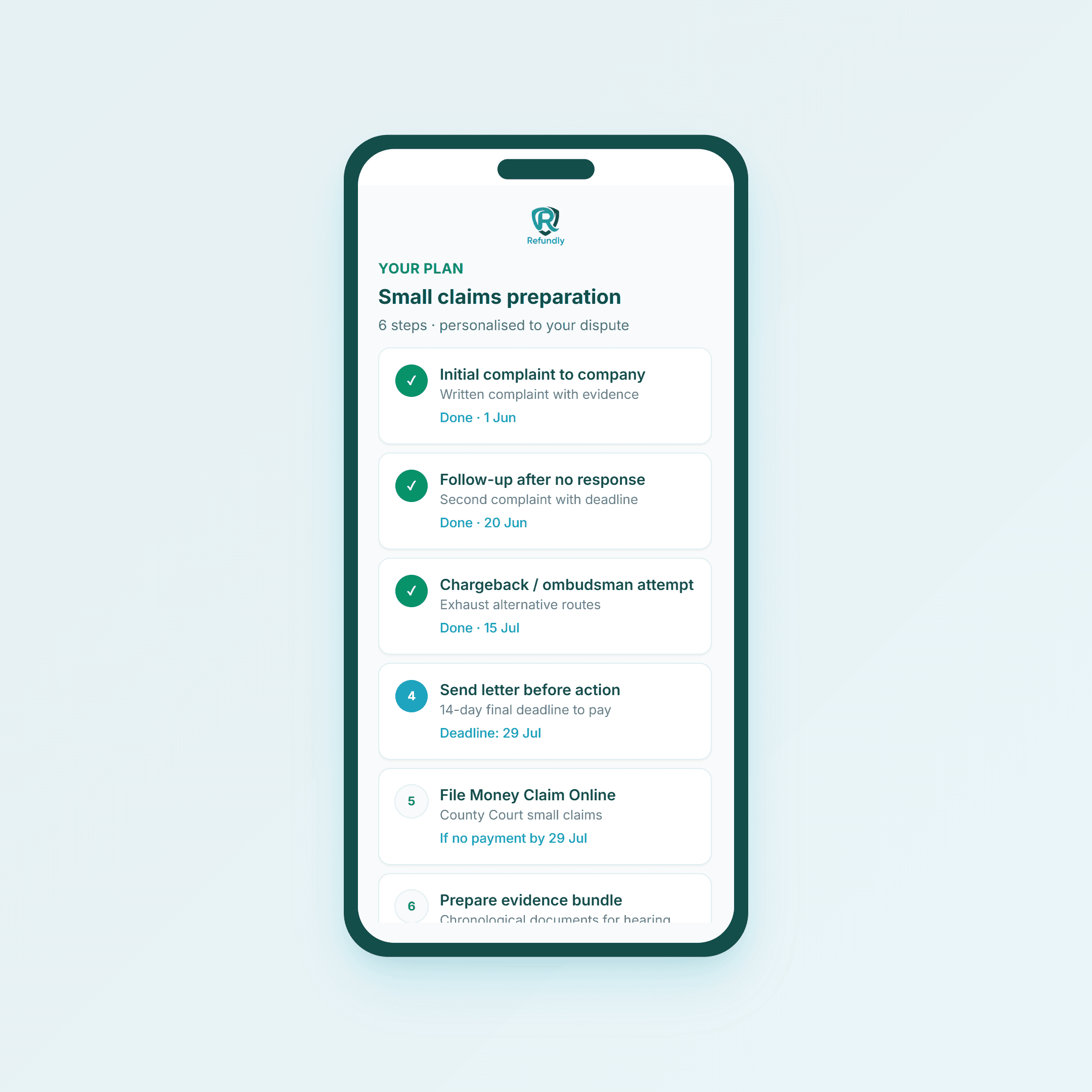 Your complaint history is court evidence
Process Overview (High Level)
- Calculate actual losses you can prove.
- Send letter before action.
- File via Money Claim Online (E&W).
- Pay the fee; wait for the defendant’s response.
- Prepare a tight evidence bundle if defended.
- Enforce if they still will not pay after judgment.
Evidence That Helps
Contract/receipt; photos; chronological emails; prior dispute outcomes; expert quotes only when proportionate.
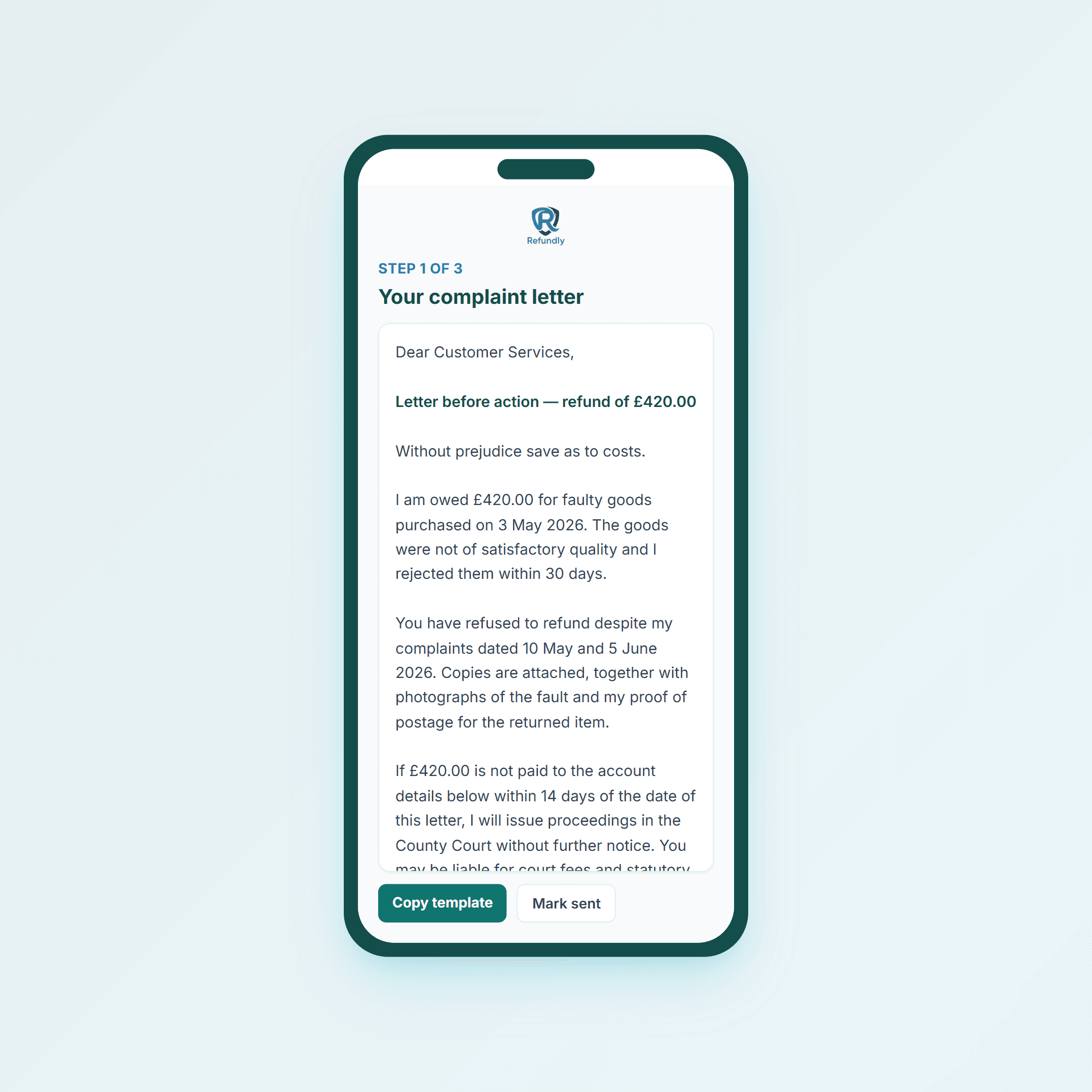 Formal letters become exhibits — Refundly helps produce them earlier in the journey
After You Win
Judgment is not automatic cash. Enforcement can mean extra steps and fees. Many defendants pay once judgment is entered.
Using Refundly Before Small Claims
- Track every complaint date
- Formal letters including pre-action style
- Exportable timeline / pack
- Clarity on when other routes are exhausted
Final Tip
Claim precise, provable amounts. A clean £400 file beats a vague £2,000 wish list.
General information for UK consumers only — not legal advice. Check GOV.UK for current fees and process; Scotland/NI differ.
Common questions
Short answers to common questions on this topic.
- What is the small claims limit in England and Wales?
- Generally up to £10,000 for many money claims in the County Court small claims track. Scotland and Northern Ireland use different procedures and limits.
- Do I need a solicitor?
- Many consumer small claims are designed to be run without a solicitor if the facts are straightforward. Complex or high-stakes cases may still benefit from advice.
- What should I do before filing?
- Courts expect a genuine attempt to resolve first: complaints, follow-ups, and usually a final letter before action giving a short deadline to pay or settle.
- What if the company ignores the claim?
- You may be able to request judgment in default if they do not respond in time. Winning still requires enforcement if they will not pay.
- How does Refundly help before court?
- By building the paper trail courts expect — dated complaints, formal letters, and an exportable evidence timeline — so court is a last step, not the first.