

In short (UK): Dry cleaning is a service — it must be done with reasonable care and skill under the Consumer Rights Act 2015. Damage from poor care can mean a refund of the clean, repair, and compensation for the garment. Photograph the item, complain in writing, challenge blanket “no liability” tickets where unfair. This is general guidance, not legal advice.
A ruined jacket or wedding dress is more than an awkward chat at the counter. This guide covers the core rules — not a full valuation pack. For a personalised step by step action plan, deadline reminders and pre-filled letter templates, use Refundly.
Your Rights for Cleaning Services
Traders must:
- Work with reasonable care and skill
- Provide the service within a reasonable time if none was fixed
- Charge a reasonable price if none was agreed
| Remedy | When it often fits |
|---|---|
| Re-clean / repair | Damage can still be put right |
| Refund of cleaning fee | Service failed / item returned worse |
| Compensation for the garment | Item damaged or destroyed through poor care |
What to Do Next (High Level)
- Inspect before you leave — or as soon as you get home.
- Photograph damage; keep the ticket, receipt, and packaging.
- Tell the cleaner in writing the same day if possible.
- State the remedy (repair, fee refund, compensation amount).
- Set a deadline; escalate if they only point at the small print.
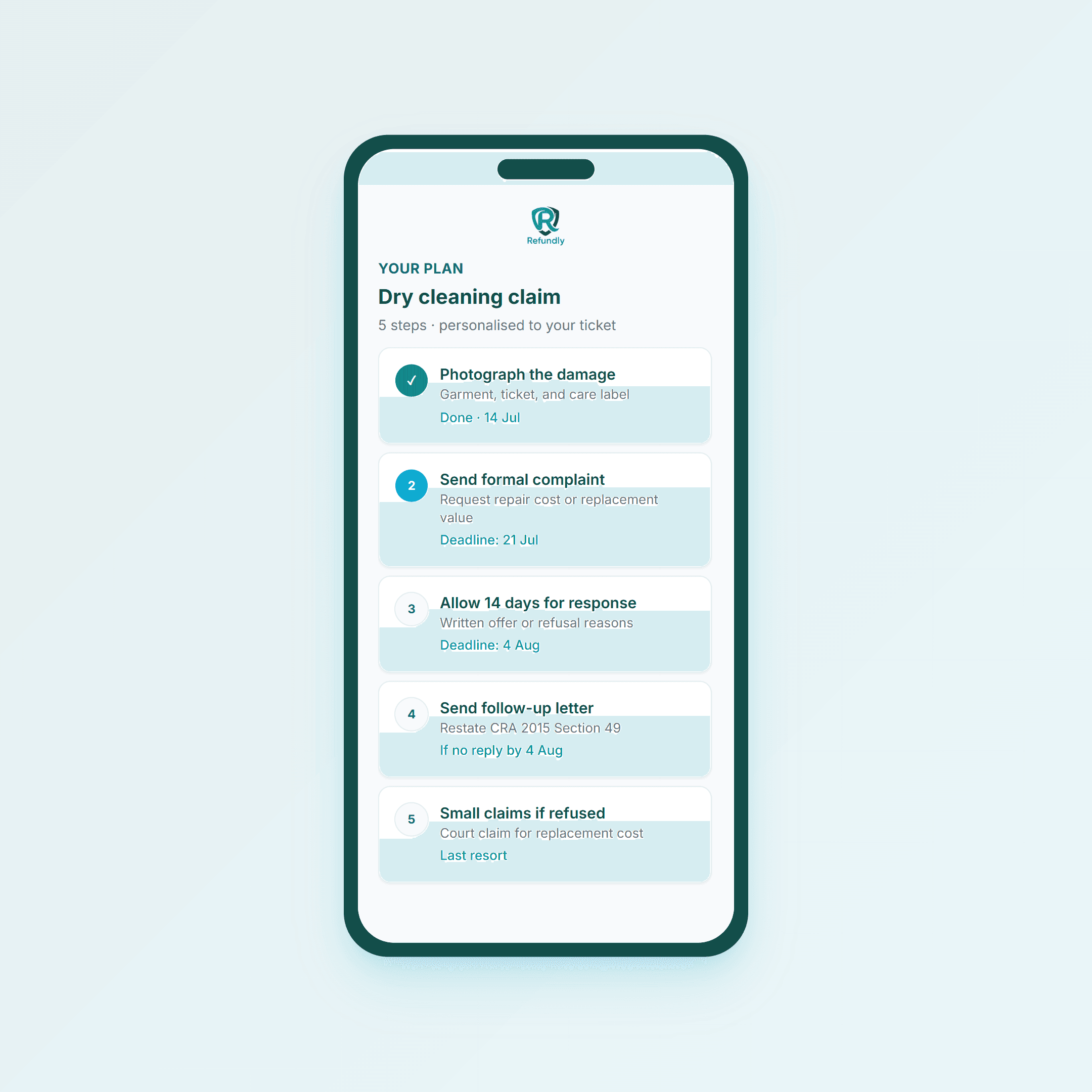 Collection date, photos, and a written complaint beat a disputed memory
What Your Complaint Should Cover
Ticket number and date; garment description and price paid to clean; what is damaged vs condition on drop-off; photos attached; compensation or repair wanted; response deadline.
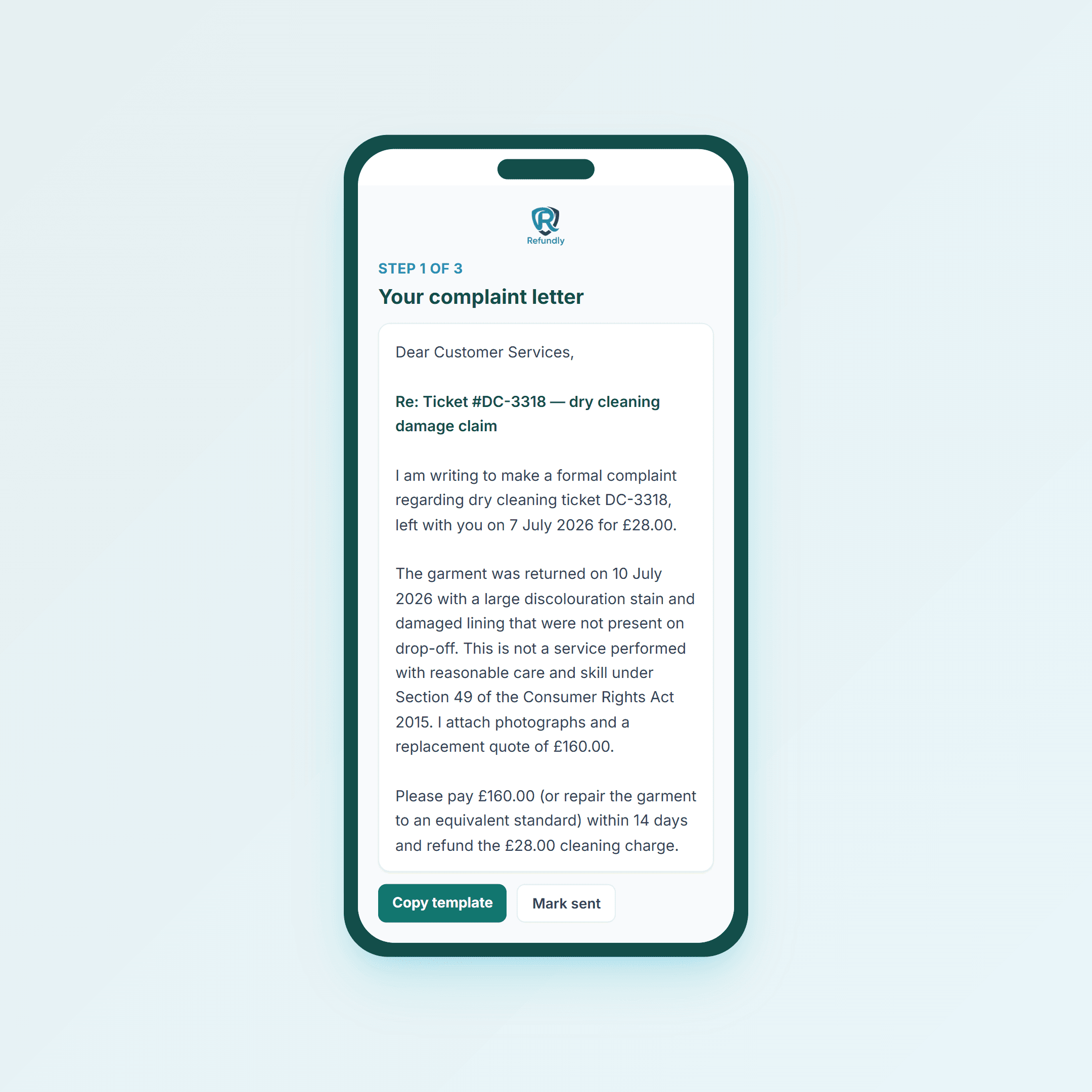 Refundly structures a care-and-skill complaint from your claim details
“No Liability” Tickets and Valuations
Disclaimers and low “maximum liability” clauses are common. They do not always wipe out CRA rights or unfair-terms challenges. For valuable items, a simple independent estimate strengthens a realistic claim for current value, not wishful new-for-old pricing.
Using Refundly
- Select services / dry-cleaning damage
- See plain-English CRA remedies
- Build an evidence timeline
- Generate a complaint letter
- Track and escalate if needed
Final Tip
For expensive garments, photograph them before drop-off and ask what process will be used. Prevention plus proof wins more claims than argument alone.
General information for UK consumers only — not legal advice. See the Consumer Rights Act 2015 (services).
Common questions
Short answers to common questions on this topic.
- What rights do I have if a dry cleaner damages my clothes?
- Cleaning is a service under the Consumer Rights Act 2015. It must be performed with reasonable care and skill. If not, you can usually seek a remedy — often repair, a price reduction/refund of the cleaning fee, and compensation for the damaged item where fault is shown.
- The ticket says “we accept no liability” — is that the end?
- Not automatically. Blanket exclusions and unfair terms can be challengeable, especially where the damage comes from poor care. The written disclaimer is not always decisive — facts and the Act still matter.
- How do I prove they caused the damage?
- Photos before and after if you have them, the ticket/receipt, stain or damage location matching the process, and (for valuable items) an independent tailor or valuer’s note. Report the problem as soon as you collect the garment.
- Can I claim the full replacement cost?
- Compensation is usually based on the item’s value allowing for age and wear — not always brand-new retail price. Get a realistic valuation and ask for that figure in writing.
- What if they refuse to pay?
- Send a formal written complaint with a deadline, then consider card chargeback/Section 75 if you paid that way, ADR if available, or small claims for a strong evidence file. Refundly helps organise the letter and timeline.