

In short (UK): Gift cards are usually credit with the retailer, not cash in your pocket. Expiry and “no cash refund” terms can sometimes be challenged if unfair or unclear, but pure change-of-mind cash-outs are limited. Insolvency often leaves balances as weak unsecured claims. Faulty goods bought with a card still attract CRA 2015 remedies. This is general guidance, not legal advice.
Confused by small print on the back of a voucher? This guide covers the core rules — not a full claim pack. For a personalised step by step action plan, deadline reminders and pre-filled letter templates, use Refundly.
When a Refund Is Stronger vs Weaker
| Situation | High-level position |
|---|---|
| Pure change of mind on unused card | Often no cash-out duty |
| Card faulty / will not load / mis-sold | Remedy / refund more realistic |
| Very short or hidden expiry | Unfair-terms angle may help |
| Retailer insolvency | Claim via administrator — recovery uncertain |
| Faulty goods paid with gift card | CRA rights against the retailer still apply |
Expiry and Unfair Terms
Read when the card expires, whether dormancy fees apply, and whether terms were clear at purchase. Extremely short or surprising restrictions are the ones worth challenging in writing — keep the packaging and receipt.
What to Do Next (High Level)
- Save the card number, terms, receipt, and balance screenshots.
- Check expiry and redemption rules in the written terms.
- For refusal or faults, complain to the retailer in writing.
- For insolvency, register with the administrator promptly.
- For faulty goods bought with the card, pursue normal CRA remedies.
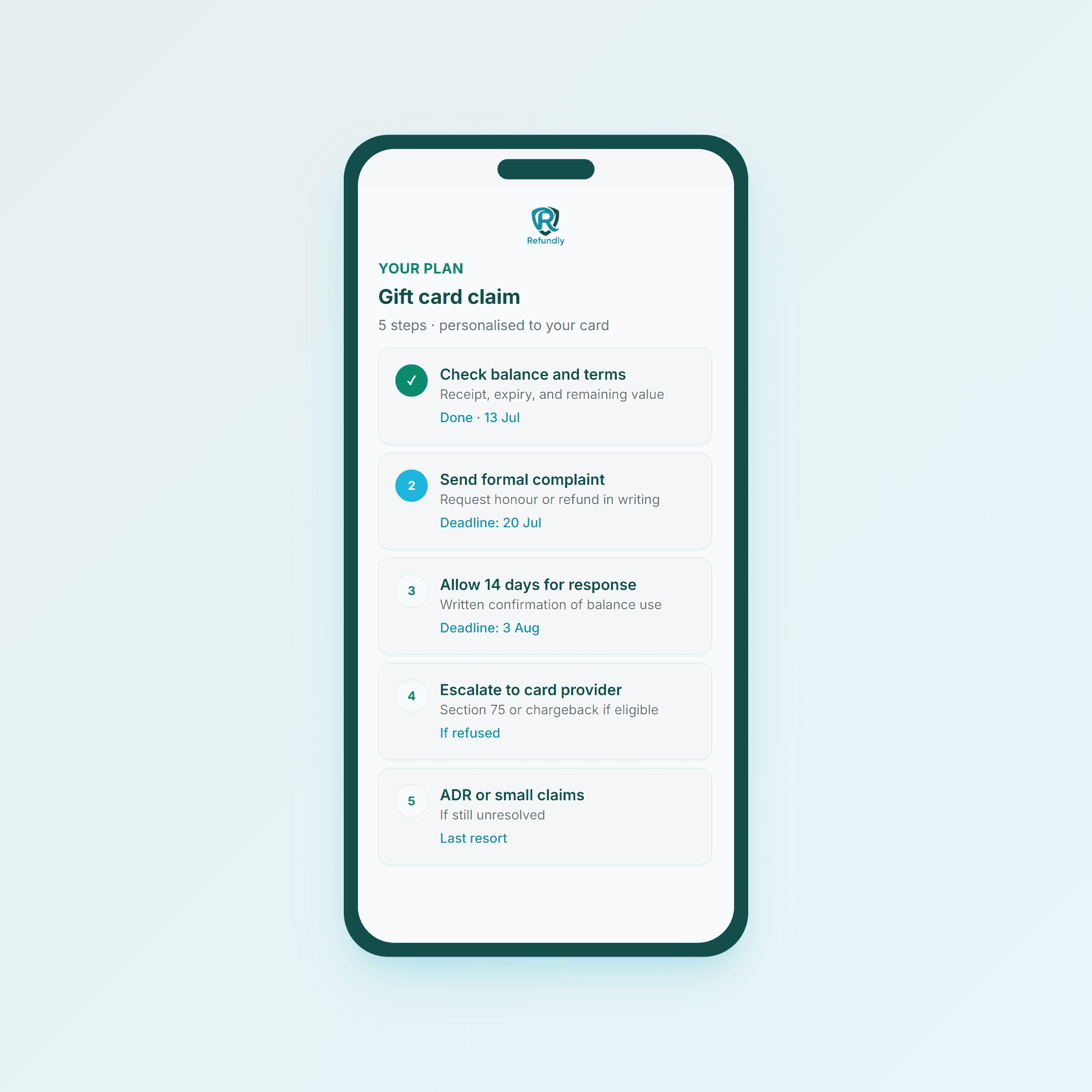 Purchase date, expiry, and complaint dates matter more than verbal shop promises
What Your Complaint Should Cover
Card/voucher reference; purchase date and value; remaining balance; what went wrong (expiry surprise, fault, refusal); remedy wanted; deadline.
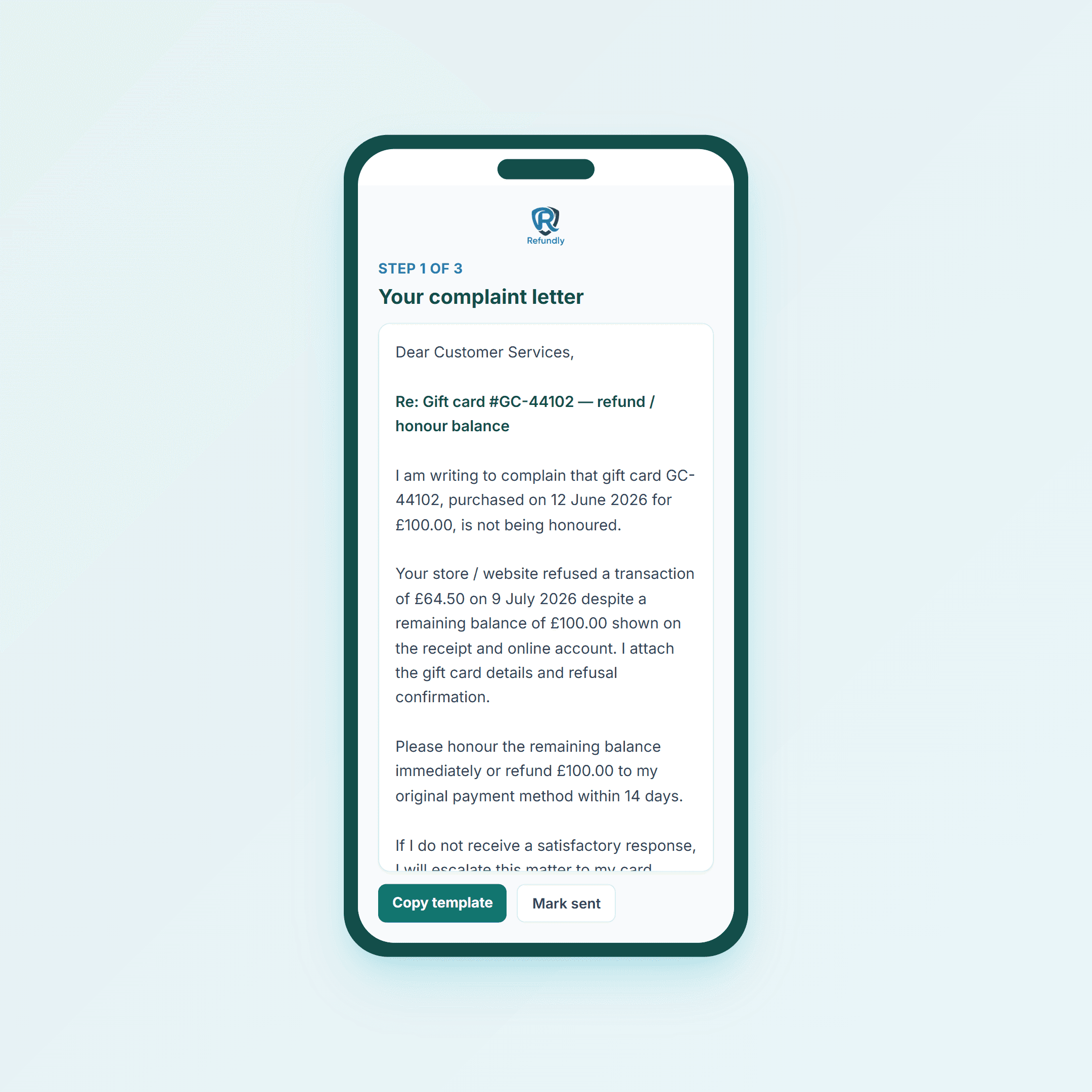 Refundly turns your card details into a clear written complaint
Insolvency Reality Check
If a chain collapses, gift-card holders rarely jump the queue. Use official administrator channels only — ignore “balance transfer” scams.
Using Refundly
- Select retail / gift-card issue
- See plain-English options for your scenario
- Personalised plan
- Complaint letter
- Track replies
Final Tip
Treat large gift-card balances like prepayment risk — spend them, or buy smaller amounts from retailers you trust.
General information for UK consumers only — not legal advice. See the Consumer Rights Act 2015 and CMA unfair contract terms guidance.
Common questions
Short answers to common questions on this topic.
- Can I get a cash refund for an unused gift card in the UK?
- Often no for pure change of mind — a gift card is usually a prepayment for goods or services with the retailer, not cash. Cash refunds are more realistic if the card itself is faulty, was mis-sold, or a specific statute/policy applies.
- Are gift card expiry dates legal?
- Expiry terms can be challenged if they are unfair or poorly brought to your attention, especially very short windows. Always check the written terms and when the clock started. Do not assume every expiry line is automatically void — or automatically enforceable.
- What if the retailer goes bust?
- Gift-card balances are often treated as unsecured claims in insolvency, so recovery can be limited or nil. Act quickly via the administrator’s process if one is appointed, and be wary of buying large balances from struggling brands.
- I bought something with a gift card and it was faulty — what then?
- Your Consumer Rights Act remedies for the faulty goods or services still apply against the retailer. You can usually seek repair, replacement, or refund of the purchase — how the refund is paid (card credit vs cash) depends on the facts and payment mix.
- What if the shop refuses a remaining balance as change?
- Many retailers are not obliged to pay out leftover balance as cash on a normal spend. Ask for the remaining balance to stay on the card or for a written policy explanation, then complain if terms were unclear at purchase.