

In short (UK): Removals are a service — movers must use reasonable care and skill under the Consumer Rights Act 2015. For damage or loss, photograph everything, check contract + insurance, notify in writing quickly, then claim repair or compensation. This is general guidance, not legal advice.
Moving day stress should not leave you stuck with broken furniture and a shrug. This guide covers the core rules — not a full claim pack. For a personalised step by step action plan, deadline reminders and pre-filled letter templates, use Refundly.
Contract, Insurance, and the Act
| Layer | What it does |
|---|---|
| CRA 2015 (services) | Care and skill; remedies for poor performance |
| Written contract | Limits, notice periods, packing responsibilities |
| Goods-in-transit insurance | Practical payout route — check excess/exclusions |
| Your home contents policy | Sometimes covers moves — check before double-claiming |
“Owner’s risk” and low liability caps are common. They do not always defeat a care-and-skill claim or an unfair-term challenge — but they do shape what evidence you need.
What to Do Next (High Level)
- Inspect on delivery — photo and list every issue the same day.
- Keep inventory, contract, and insurance paperwork.
- Notify the mover in writing within any stated deadline.
- Get repair quotes or replacement valuations.
- Claim via their insurance process and a formal complaint if needed.
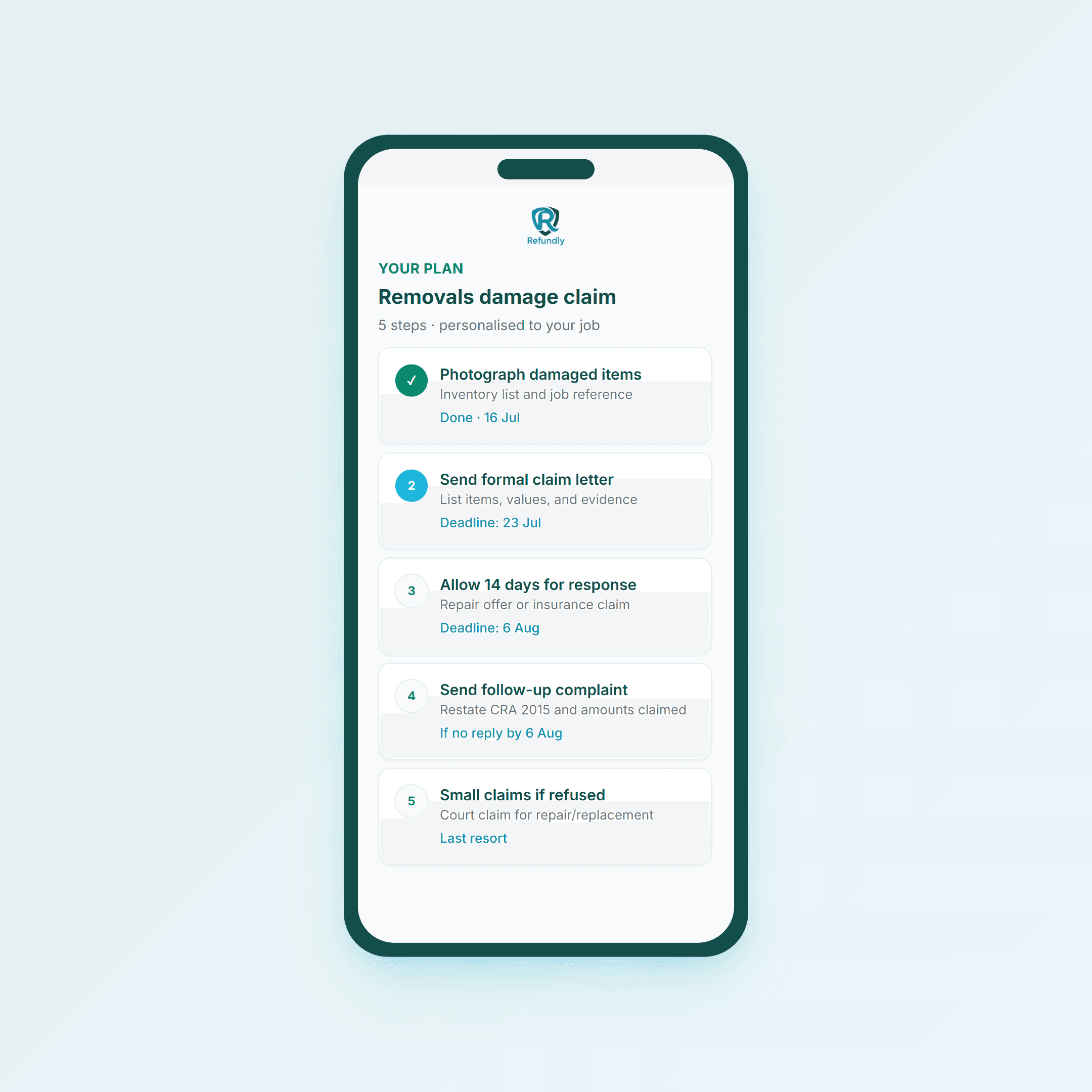 Delivery-day photos and written notice dates win removals disputes
What Your Complaint Should Cover
Job/reference number; move date and addresses; itemised damage/loss list with photos; who packed each item; contract/insurance clause relied on; amount claimed; response deadline.
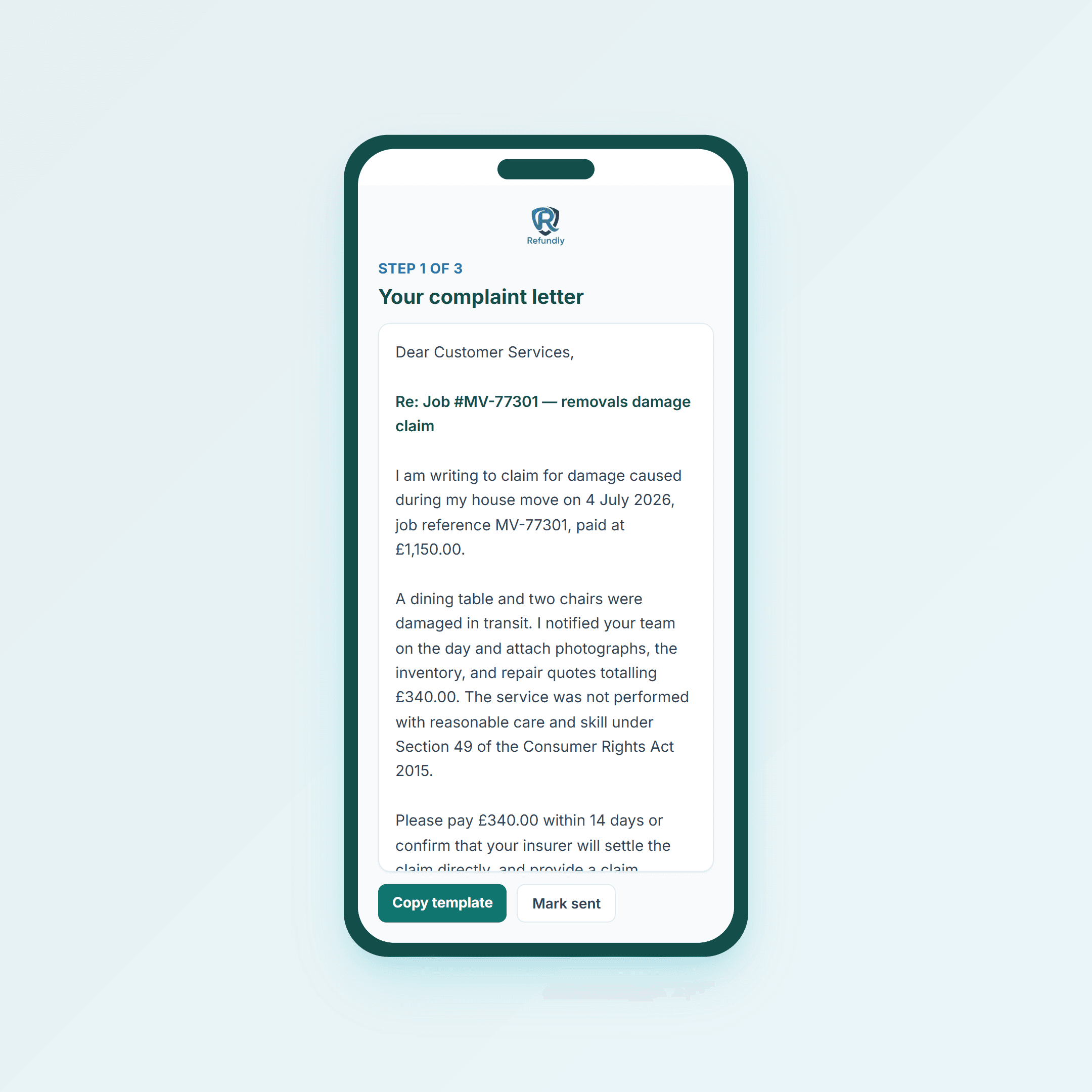 Refundly builds a clear damages claim from your inventory and photos
Packing Disputes
Owner-packed cartons are a frequent defence. That does not excuse throwing boxes or crushing clearly fragile marked items — stick to facts and photos.
Using Refundly
- Select services / removals damage
- See CRA + insurance framing
- Evidence timeline
- Complaint letter + plan
- Track and escalate
Final Tip
Walk through with the crew before they leave. Same-day written notice beats a discovery three weeks later when boxes are finally unpacked.
General information for UK consumers only — not legal advice. See the Consumer Rights Act 2015 (services).
Common questions
Short answers to common questions on this topic.
- Who is liable if a removals company damages my belongings?
- The mover must perform the service with reasonable care and skill under the Consumer Rights Act 2015. Damage or loss from poor handling can justify repair, replacement cost, or a price reduction — subject to contract terms and any declared insurance limits.
- Does their insurance replace my rights?
- Insurance is a practical claims route, not a wipe-out of statutory rights. Check whether cover is included, optional, or “owner’s risk,” and what excess and exclusions apply. Still put the trader on notice in writing.
- What evidence do I need?
- Inventory or job sheet, photos before and after, dated damage list, quotes for repair or replacement, and the contract/insurance documents. Note who packed the goods — owner-packed boxes are often treated differently.
- How quickly must I report damage?
- Report as soon as you discover it — ideally on delivery day, with written follow-up. Many contracts set short notification windows. Late notice makes disputes harder even when the mover was at fault.
- What if they blame “owner packed” or refuse to pay?
- Challenge weak exclusions where their handling still caused the loss. Send a formal complaint with valuations, then consider ADR, card/Section 75 routes, or small claims for a strong file. Refundly helps structure the claim.