

In short (UK): A manufacturer warranty is a bonus — it does not replace your Consumer Rights Act 2015 rights against the retailer. Faulty goods can mean reject, repair/replace, or price reduction/refund. Do not accept “speak to the maker only.” This is general guidance, not legal advice.
Shops love pointing at the warranty booklet. Know the difference before you accept a slow manufacturer queue. This guide covers the core rules — not a full claim pack. For a personalised step by step action plan, deadline reminders and pre-filled letter templates, use Refundly.
Warranty vs Statutory Rights
| Statutory rights (CRA) | Manufacturer warranty | |
|---|---|---|
| Who is liable | Usually the seller/retailer | Manufacturer (per warranty terms) |
| Can it be excluded? | Not by small print | Limited to its own wording |
| Typical remedies | Reject / repair / replace / price reduction | Often repair only |
| Timeframe | Reasonable durability + staged rights | Whatever the warranty says |
Key CRA Staging (Goods)
- Short-term right to reject — commonly 30 days for a full refund when goods fail the standards
- After that — repair or replacement first in many cases
- If that fails — price reduction or final right to reject
“Satisfactory quality,” fit for purpose, and as described still apply whether or not a warranty exists.
What to Do Next (High Level)
- Put the retailer on notice in writing (not only the manufacturer).
- State the fault and the CRA remedy you want.
- Attach proof of purchase and photos/errors.
- Use the warranty as well if it is faster — without dropping the seller claim.
- Escalate if the shop only repeats “contact the manufacturer.”
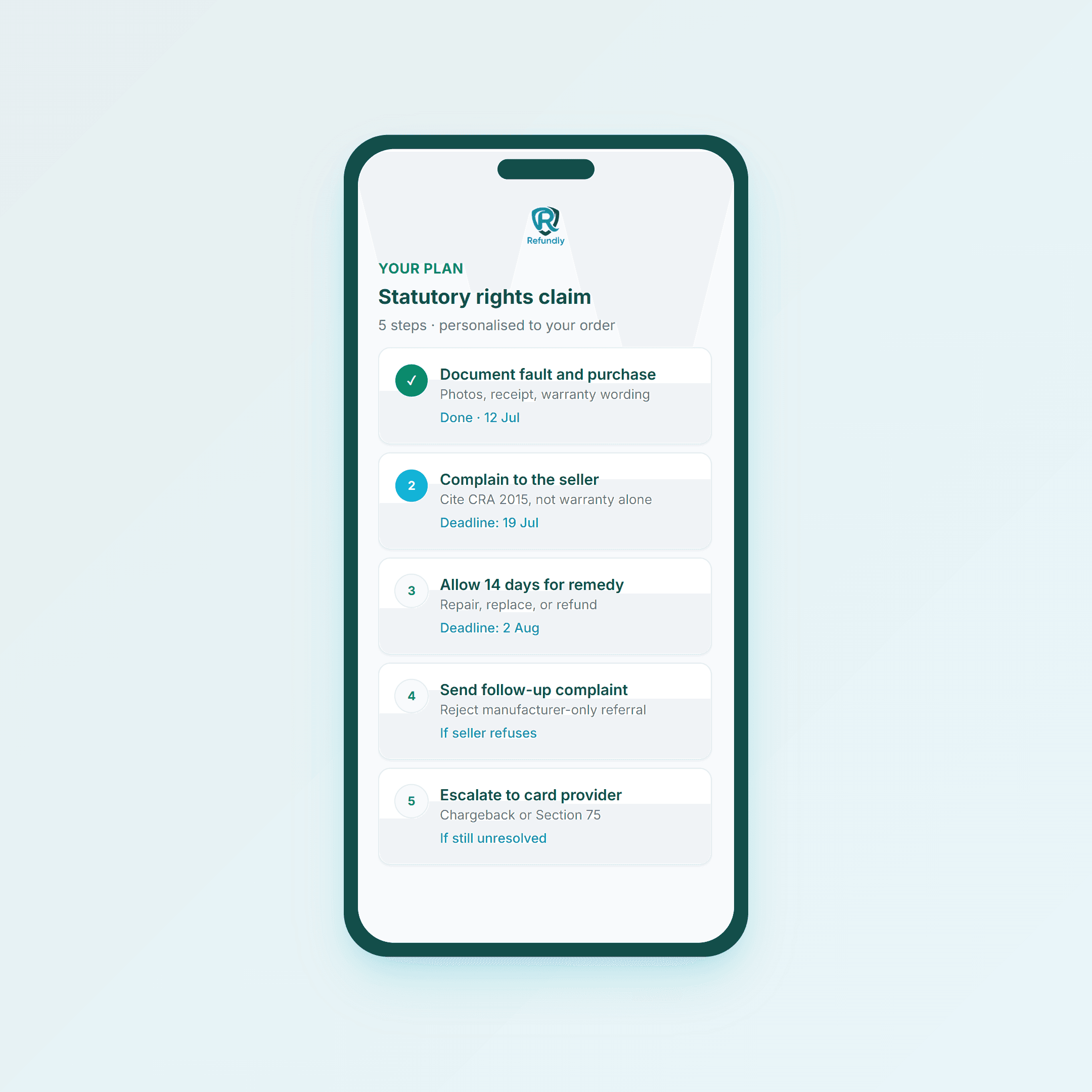 Purchase date, fault date, and retailer complaint dates protect CRA timelines
What Your Complaint Should Cover
Order/receipt details; fault description and when it appeared; that you rely on the Consumer Rights Act against the seller; remedy wanted; that manufacturer warranty is optional parallel only; deadline.
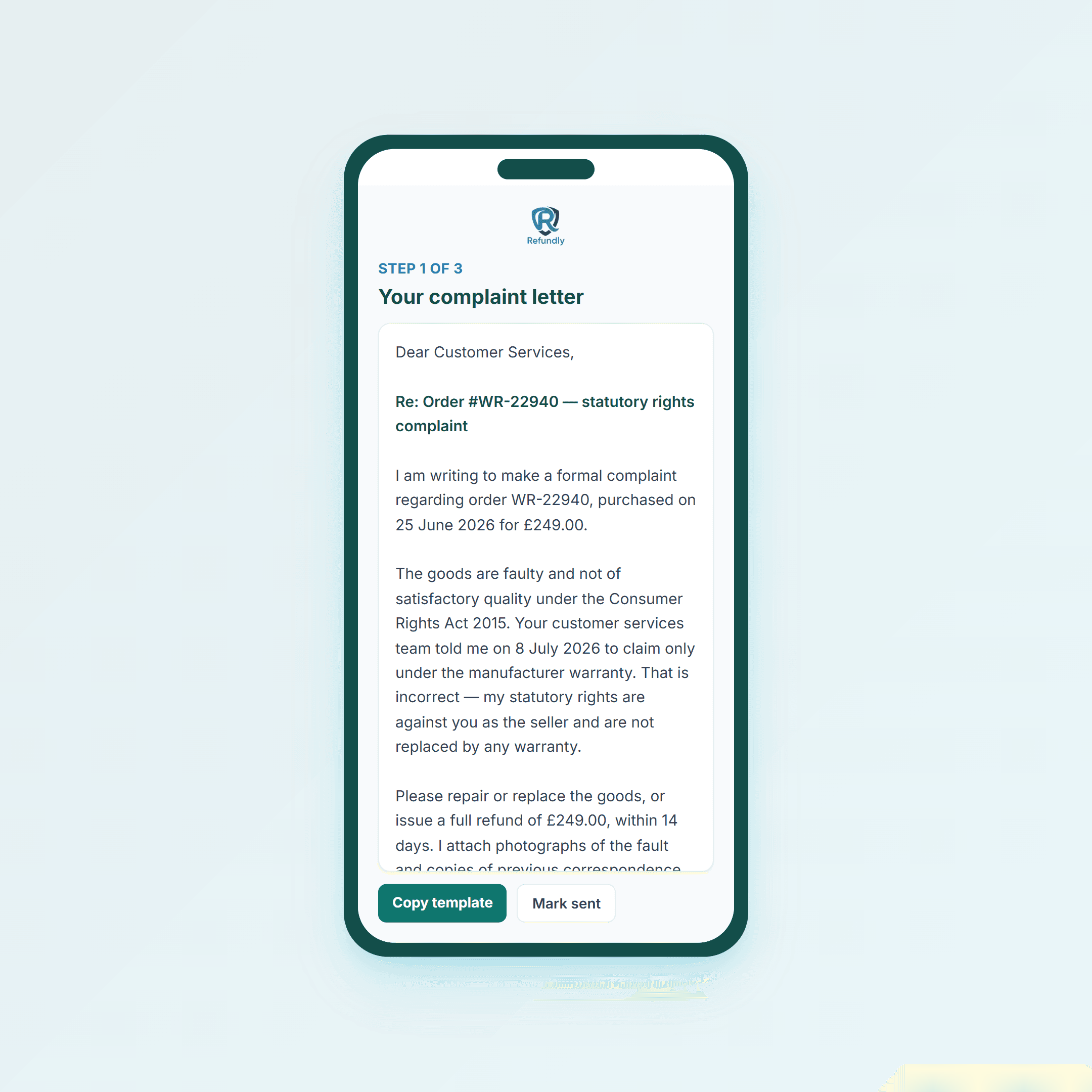 Refundly frames a seller-facing CRA letter from your product details
Extended Warranties
Optional extras can help with accidental damage — they are not a substitute for legal rights. If sold online or by phone, cooling-off may apply to the warranty product itself.
Using Refundly
- Select faulty goods / retail issue
- See CRA remedies in plain English
- Personalised plan aimed at the seller
- Complaint letter
- Track and escalate
Final Tip
Always write to the retailer first. Manufacturer goodwill is useful; statutory rights are the backbone.
General information for UK consumers only — not legal advice. See the Consumer Rights Act 2015.
Common questions
Short answers to common questions on this topic.
- Is a manufacturer warranty the same as my legal rights?
- No. A warranty or guarantee is usually an extra promise. Your statutory rights under the Consumer Rights Act 2015 are against the retailer (the seller) and cannot be replaced by “send it to the manufacturer.”
- Can a shop refuse a refund and tell me to use the warranty?
- They can offer the warranty route, but they cannot wipe out CRA remedies for goods that are faulty, not fit for purpose, or not as described. Within 30 days you often have a short-term right to reject for a full refund in qualifying cases.
- What if the warranty has expired?
- Statutory rights can still apply. Goods must last a reasonable time — for many products that can be well beyond a one-year warranty. Proof and the nature of the fault matter.
- Does an extended warranty change anything?
- It may add repair cover, but it does not remove CRA rights against the seller. Be wary of high-pressure add-ons sold at till — you can often cancel distance-sold extras under cooling-off rules.
- Who do I complain to first?
- Complain to the retailer in writing citing the Consumer Rights Act. You can use the manufacturer warranty in parallel if it is convenient, but keep the seller on the hook for statutory remedies.