
In short (UK): Challenge unfair or incorrect bank fees with a written complaint to your bank, then free escalation to the Financial Ombudsman Service after a final response or eight weeks. Error, duplicate, and poor-handling cases are stronger than “I simply do not like overdraft pricing.” This is general guidance, not legal advice.
Unexpected fees stack up fast. This guide covers the core rules — not a full case review. For a personalised step by step action plan, deadline reminders and pre-filled letter templates, use Refundly.
Common Fee Problems
Duplicate charges; fees after you closed or switched; unclear overdraft opt-in; returned-item cascades; charges while a complaint or fraud case was open; poor treatment when you were in financial difficulty.
What to Do Next (High Level)
- Download statements and highlight every disputed fee.
- Note what you were told (app screens, letters, branch notes).
- Complain in writing via the bank’s official process.
- Ask for a refund/credit and a fee-by-fee explanation.
- If unresolved after final response or 8 weeks, go to FOS.
| Situation | What to aim for |
|---|---|
| Clear banking error / duplicate | Full refund of those fees |
| Confusing or mishandled overdraft | Partial or full goodwill/fairness refund |
| Fees during vulnerability / hardship | Fair treatment review + refund where upheld |
| Simply high but disclosed pricing | Harder — focus on errors and process failings |
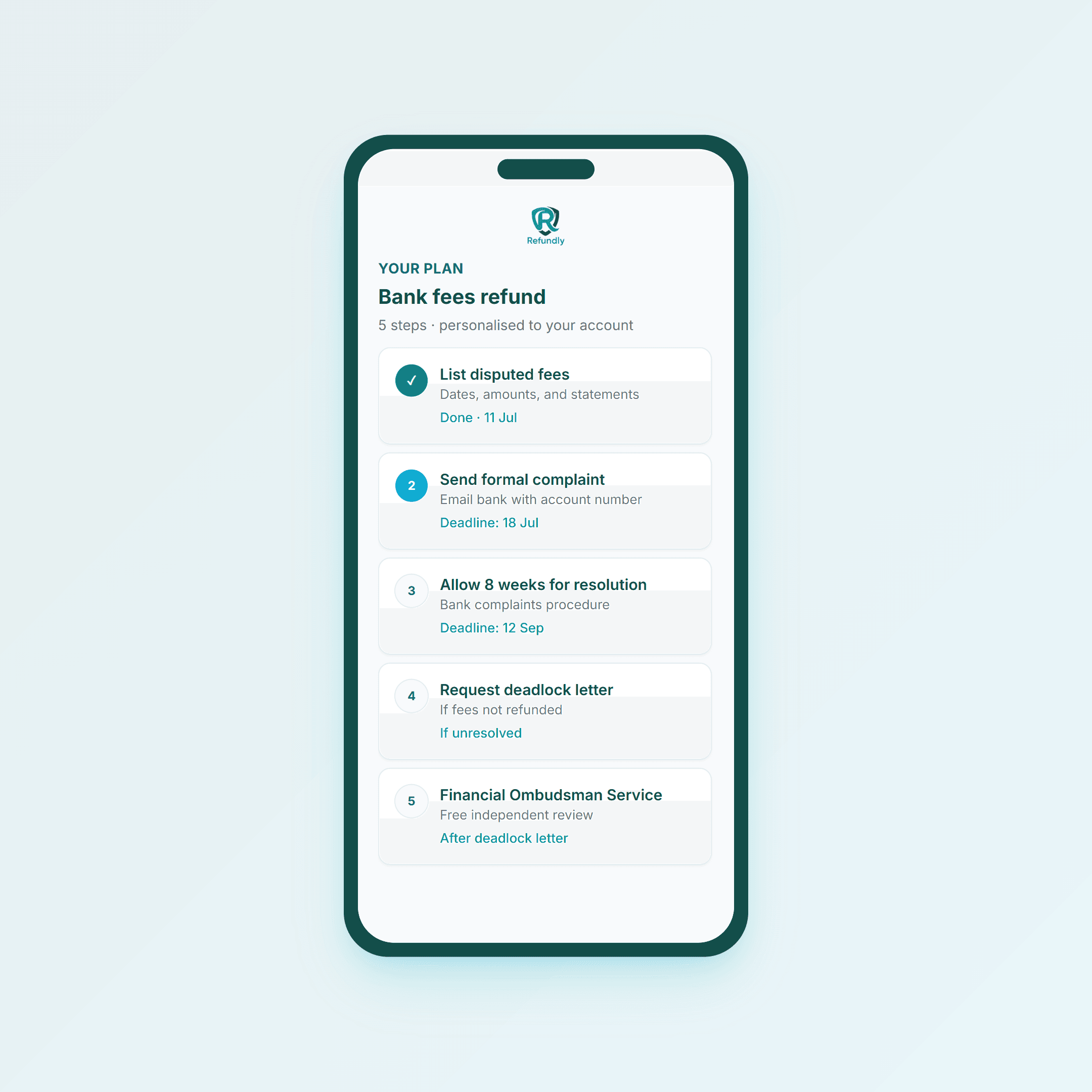 Fee dates vs complaint and Ombudsman clocks keep the case organised
What Your Complaint Should Cover
Account details; list of fees with dates and amounts; why each is wrong or unfair; impact on you; refund total requested; deadline for a final response.
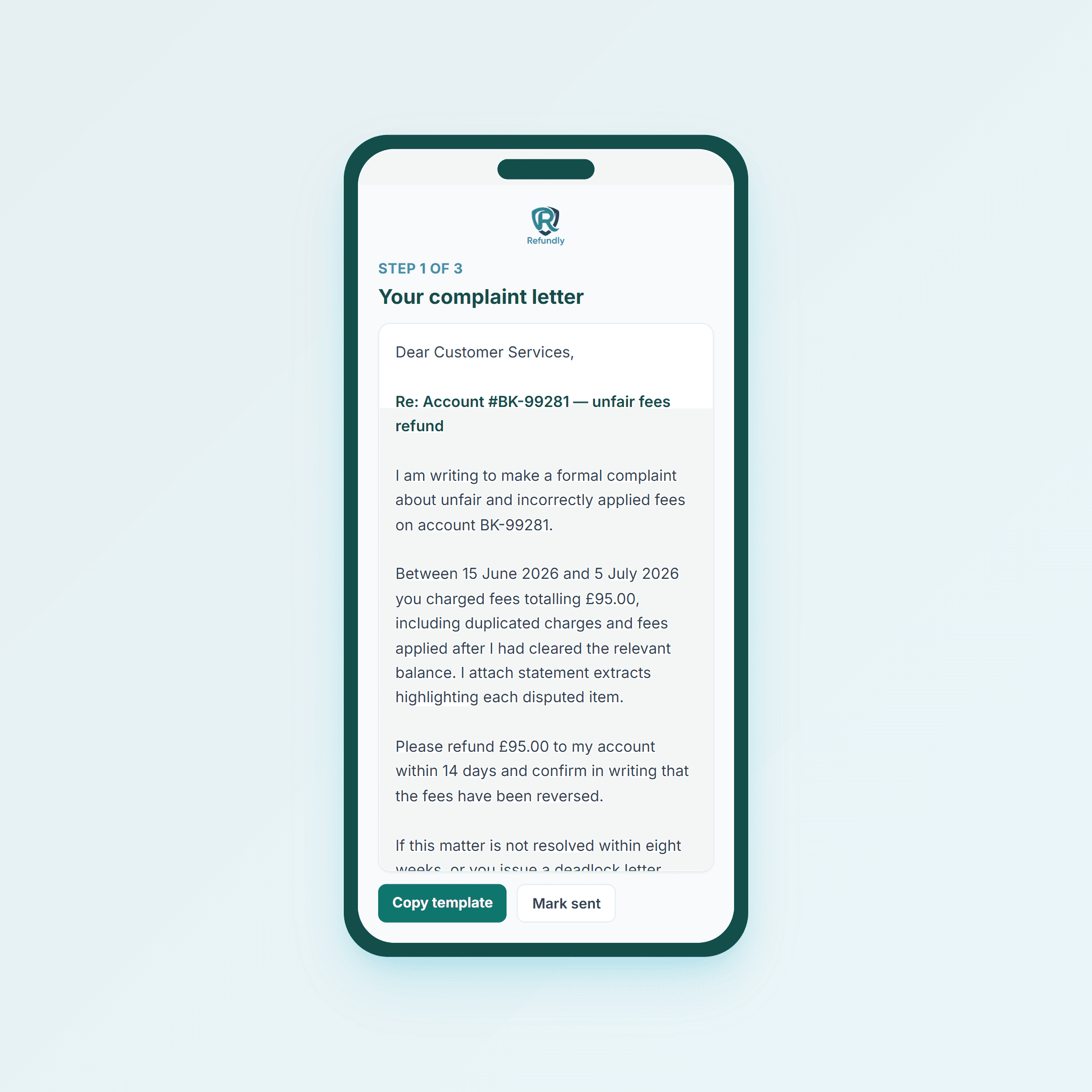 A structured bank complaint is what FOS expects to see next
Financial Ombudsman Service
Free for eligible consumers. You generally need the bank’s final response (or the eight-week wait). Keep the complaint reference and send FOS the same evidence pack.
Using Refundly
- Select banking / fees issue
- See complaint and FOS-style escalation framing
- Timeline of charges
- Formal letter + follow-up plan
- Track deadlines
Final Tip
Dispute early and in writing. Phone promises fade; a complaint reference and fee schedule do not.
General information for UK consumers only — not legal advice. See the Financial Ombudsman Service and your bank’s published complaints process.
Common questions
Short answers to common questions on this topic.
- Can I get a refund of bank or overdraft fees in the UK?
- Sometimes yes — for example duplicate charges, fees applied in error, charges after you followed the bank’s process, or where the bank’s handling was unfair or poorly communicated. Complain in writing first; many refunds are goodwill or error corrections rather than a blanket legal wipe-out of all fees.
- What is the first step?
- Gather statements showing each fee, note dates and any hardship or bank mistakes, then use the bank’s formal complaints process. Ask for a full or partial refund and a clear explanation of each charge.
- When can I go to the Financial Ombudsman?
- Usually after the bank sends a final response, or if eight weeks have passed without one. The Financial Ombudsman Service (FOS) is free for consumers and can tell the bank to refund or put things right if it upholds your complaint.
- Are overdraft fees always refundable?
- No. Agreed overdraft pricing that was clearly disclosed is harder to undo just because you dislike the cost. Stronger angles include errors, confusing communications, vulnerable-customer handling, or charges that do not match what you were told.
- How long do I have to complain?
- Complain to the bank promptly while records are fresh. Ombudsman time limits usually run from when you received the bank’s final response (or from the end of the eight-week period) — check current FOS rules for your case.