

In short (UK): A claim rejection is not the final word. Compare the decline reasons to your policy wording, complain in writing, wait for a final response (or eight weeks), then escalate free to the Financial Ombudsman Service. Keep evidence and every letter. This is general guidance, not legal advice.
Home, motor, travel, or gadget claim turned down? This guide covers the core rules — not a full advocacy pack. For a personalised step by step action plan, deadline reminders and pre-filled letter templates, use Refundly.
Read the Decline Properly
| Check | Why it matters |
|---|---|
| Exact exclusion cited | Must match the policy you bought |
| What questions you were asked | Non-disclosure arguments turn on the form |
| Evidence they say is missing | You can often supply it on review |
| Offer vs full decline | Underpayment can be complained about too |
| Who sold the policy | Broker and insurer complaint routes may both matter |
Ask for the policy schedule, full wording, and claim notes if anything is vague.
Common Rejection Themes
Exclusion for wear and tear; late notification; alleged non-disclosure; “not stolen / not accidental”; betterment deductions; travel “cutting short” disputes; motor fault arguments. Each is fact-specific — quote the clause, then answer it with evidence.
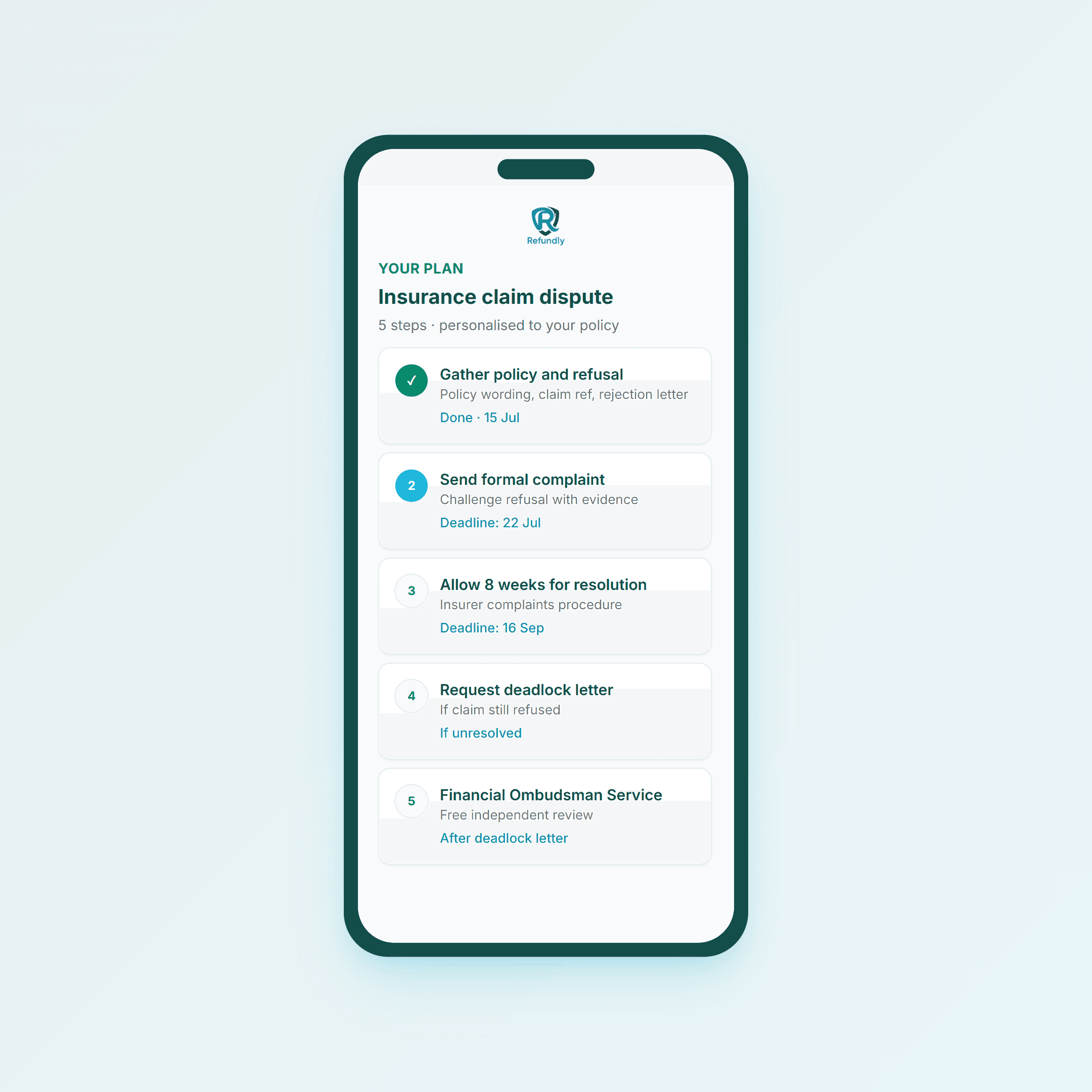 Diary claim date, decline date, complaint date, and the eight-week / FOS window
What to Do Next (High Level)
- Save policy, proposal answers, photos, police/crime refs, invoices, decline letter.
- Send a formal complaint (not only a claim chat) asking for reconsideration.
- Address each decline reason with documents.
- Allow the complaints process — chase for a final response.
- Escalate to FOS within their time limits if unresolved or unfair.
What Your Complaint Should Cover
Policy and claim numbers; what happened; amount claimed; why the rejection is wrong (clause-by-clause); evidence list; outcome sought (pay claim / revise offer / compensate poor handling); deadline.
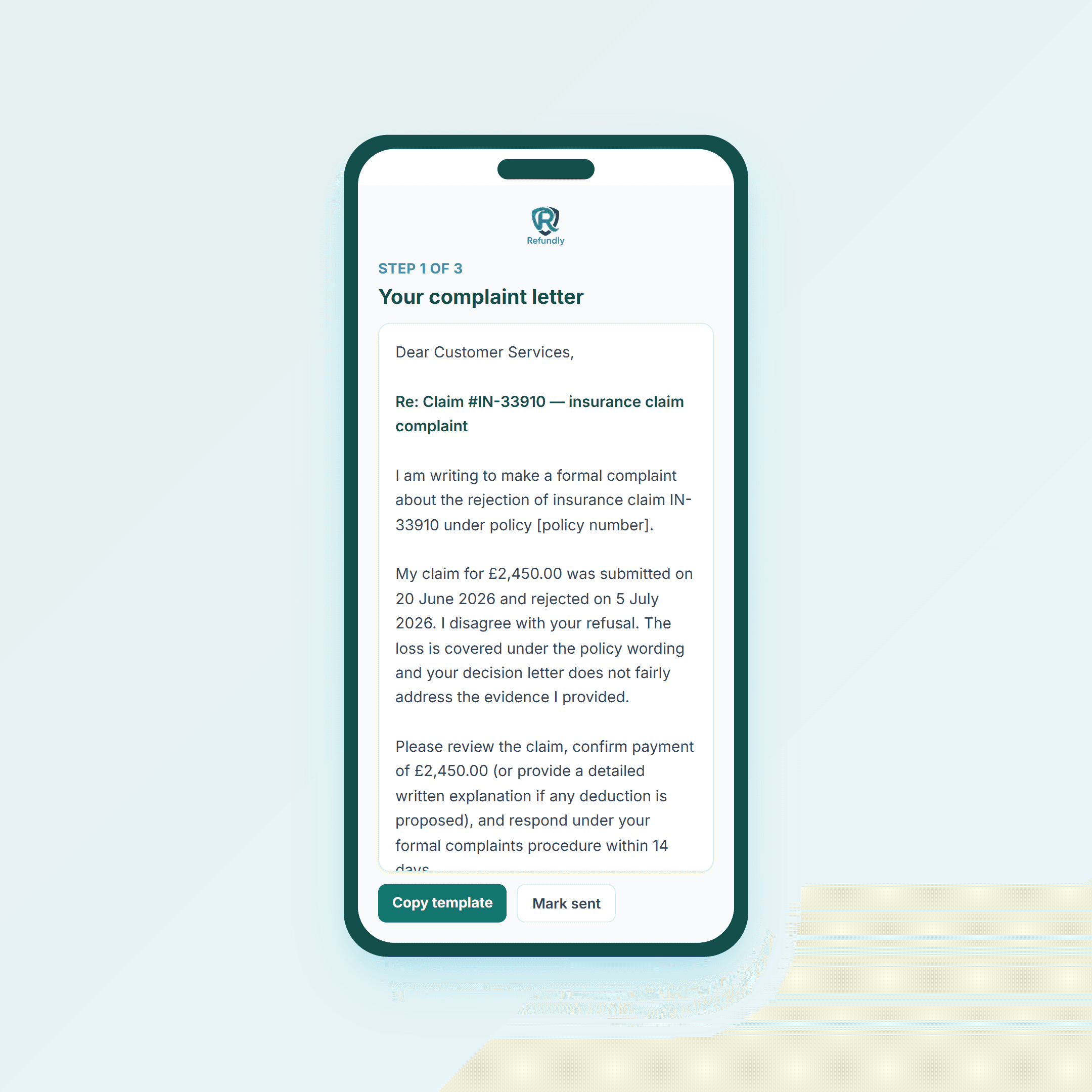 A structured complaint is what FOS expects to see next
Financial Ombudsman Service
Free for eligible consumers. Usually after a final response or after eight weeks. FOS looks at what is fair and reasonable — not only the insurer’s strict reading. Accepting a FOS decision binds the firm; you can still reject it and consider court.
Using Refundly
- Select insurance / financial complaint
- Plain-English complaint and FOS framing
- Personalised plan
- Complaint letter
- Track eight-week and Ombudsman deadlines
Final Tip
Complain about process as well as the decision if the insurer dragged its feet or ignored evidence — FOS can award compensation for poor service even when coverage arguments are tight.
General information for UK consumers only — not legal advice. See Financial Ombudsman Service guidance and the Consumer Insurance (Disclosure and Representations) Act 2012 where non-disclosure is in issue.
Common questions
Short answers to common questions on this topic.
- What should I do first if my insurance claim is rejected?
- Read the decline letter and policy wording carefully, gather your evidence, then send a formal written complaint asking the insurer to review the decision. Ask for a clear explanation tied to specific policy clauses.
- How long does the insurer get to resolve a complaint?
- Firms generally have up to eight weeks to issue a final response. You can go to the Financial Ombudsman Service sooner if you get a deadlock/final response earlier, or after eight weeks if they have not finished.
- Is the Financial Ombudsman Service free?
- Yes for consumers. FOS can tell the insurer to pay a claim, award compensation for distress or poor service, and its decisions are binding on the firm if you accept them.
- Can they reject me for non-disclosure?
- Insurers sometimes rely on misrepresentation or non-disclosure. Consumer insurance rules limit harsh outcomes where you took reasonable care answering questions — challenge unfair “catch-all” declines with what you were actually asked.
- Should I accept a low offer?
- Only if it fairly reflects the policy. You can complain about quantum as well as a full decline. Get repair estimates or valuations before you settle.