
In short (UK): Gym rights depend on how you joined. Distance sign-ups often have a 14-day cooling-off. After that, follow written notice and the contract — but unfair terms, continued charges after cancel, and mis-selling can still be challenged. Cancel in writing, keep bank proof, do not rely on a chat. This is general guidance, not legal advice.
Stuck with a membership you barely use? This guide covers the core rules — not a full exit pack. For a personalised step by step action plan, deadline reminders and pre-filled letter templates, use Refundly.
First: How Did You Join?
| Sign-up method | Extra rules that often apply |
|---|---|
| Online / phone / distance | Cooling-off may apply |
| In person at the gym | Cooling-off weaker; contract + unfair terms still matter |
| Direct debit | Cancel mandate carefully after valid notice |
| Annual paid in full | Unused months = fact-specific |
| Minimum term | Early exit only in limited cases unless terms allow |
Keep the written contract and sign-up screenshots.
Cooling-Off (Distance)
Often 14 days to cancel for any reason on qualifying distance contracts. Cancel in writing; refunds usually within 14 days; a reasonable deduction for use may apply — not an inflated admin fee.
After Cooling-Off
Expect written notice + notice period. Terms may be challengeable if they lock you in with excessive exit fees, hide traps, or keep charging after a valid cancel. “No refunds ever” is not always the end of the story.
When Refunds (Not Only Cancellation) Are Stronger
Cooling-off; gym closed / facilities withdrawn; mis-sold promises; charges after valid cancel; duplicate debits; serious failure to provide the service. Weaker: you simply stopped attending a fair minimum term you agreed to — though negotiation still helps.
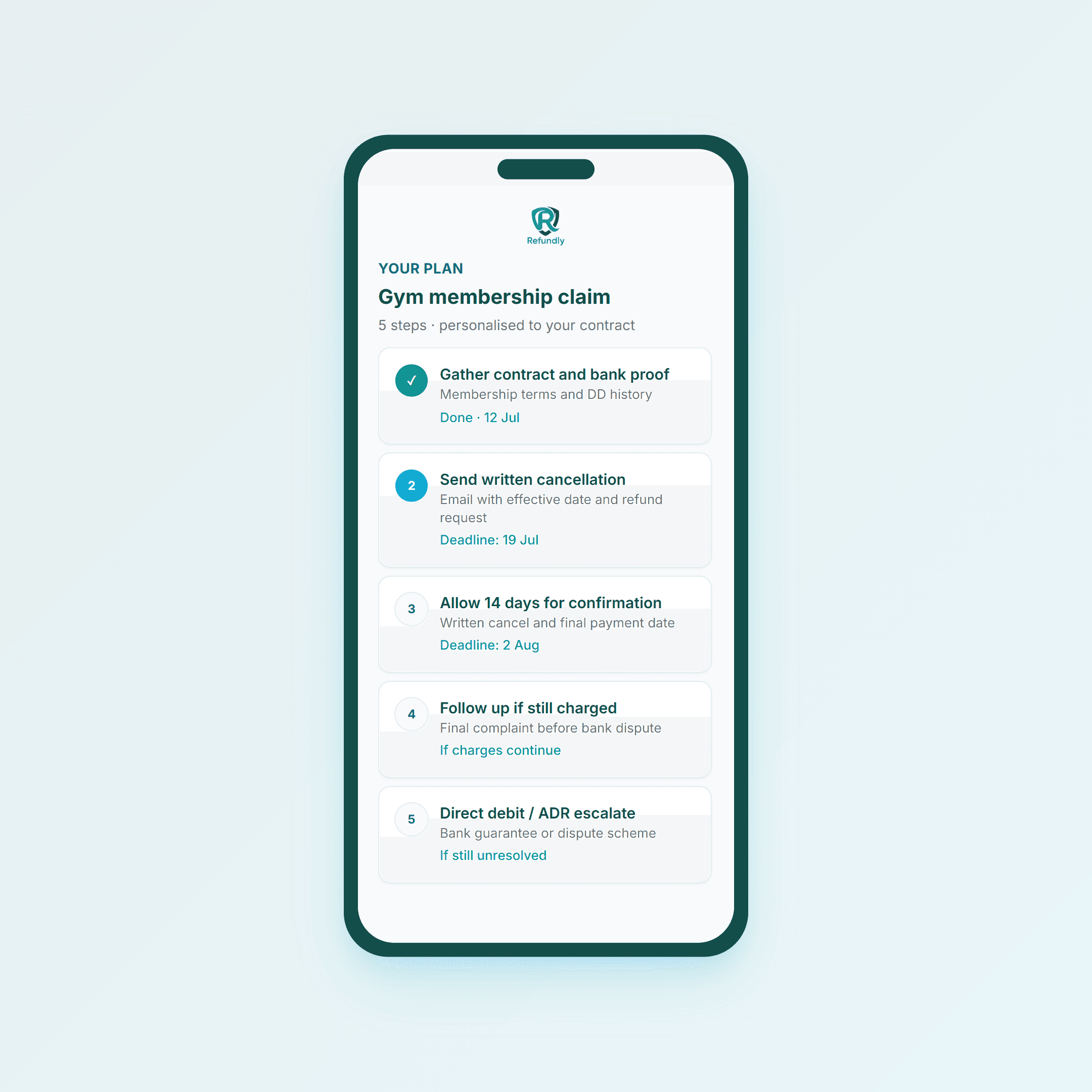 Track cancel date, notice end, and every direct debit
What to Do Next (High Level)
- Collect contract, price, start date, marketing promises, bank statements.
- Cancel in writing and ask for confirmation.
- State the effective end date.
- After valid notice, stop ongoing harm if charges continue (bank tools).
- Escalate unpaid refunds with a formal complaint trail.
What Your Letter Should Cover
Membership number; how/when you joined; cancel date and notice relied on; cooling-off or unfair-term points if relevant; charges to refund; deadline.
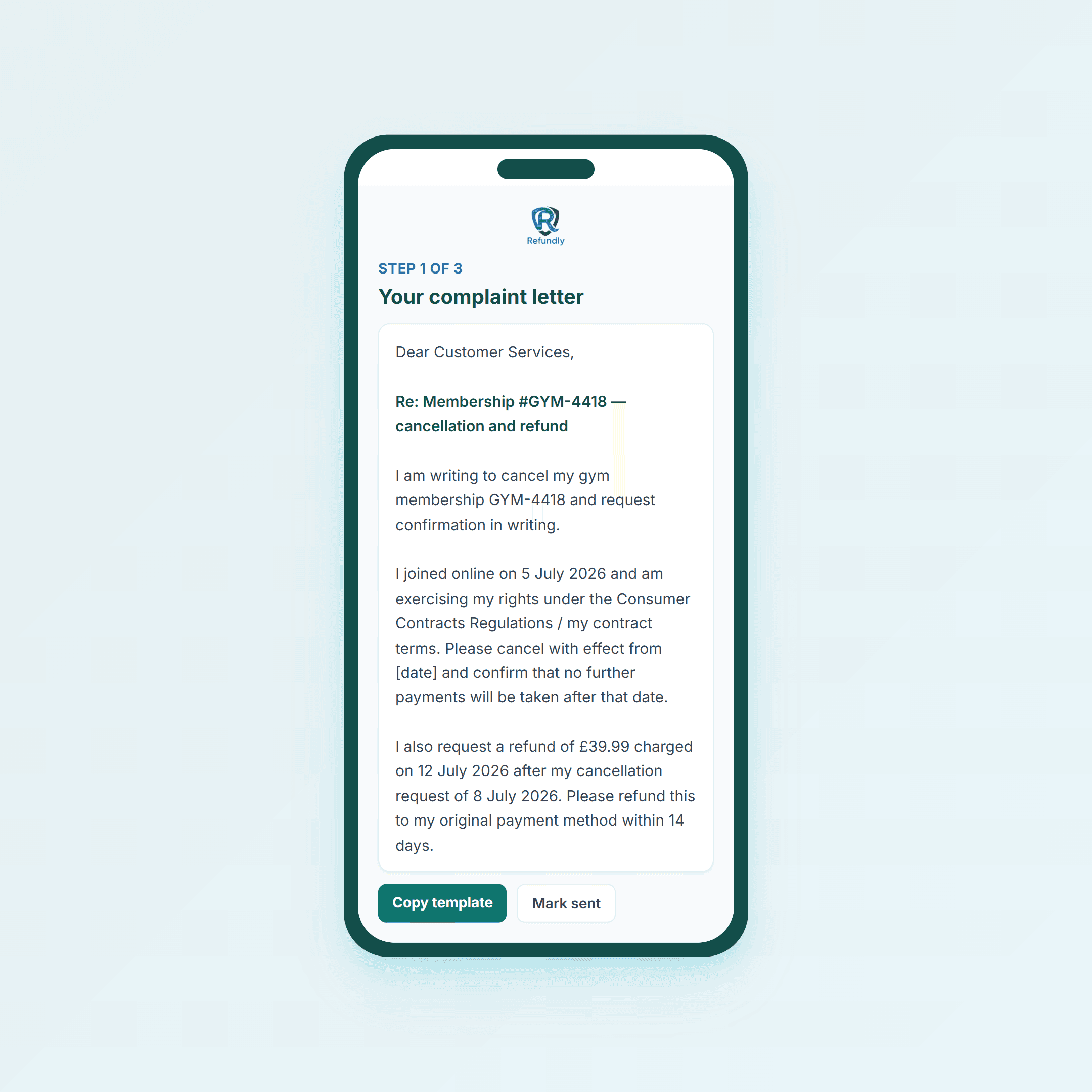 Written cancel + refund requests beat chat logs
Escalation (Names Only)
Gym complaints process → ADR if available → Citizens Advice/Trading Standards guidance → chargeback/Section 75 for clear mis-selling or non-supply → small claims for strong overcharge files.
Using Refundly
- Select subscriptions / service issue
- Rights based on sign-up method
- Personalised plan
- Cancellation or complaint letter
- Track charges and replies
Final Tip
Write first, quote dates, keep bank proof. Online joiners: check the 14-day clock before anything else.
General information for UK consumers only — not legal advice. See the Consumer Rights Act 2015 and Consumer Contracts Regulations.
Common questions
Short answers to common questions on this topic.
- Can I cancel a gym membership within 14 days?
- Often yes if you signed up online, by phone, or at a distance — the Consumer Contracts cooling-off rules may apply. In-gym sign-ups are weaker on cooling-off, but unfair terms and poor service rules still matter.
- Do I still have to serve a notice period?
- After cooling-off, most contracts need written notice and a notice period in the terms. Check the written contract. Excessive or impossible cancellation terms may be challengeable as unfair.
- Can a gym refuse all refunds?
- A blanket “no refunds” line is not always enforceable — especially for cooling-off cancellations, charges after valid cancel, gym closure, or mis-selling. Facts matter.
- Should I cancel the direct debit first?
- Cancel with the gym in writing first, then protect the bank account if charges continue after a valid cancellation. Cancelling DD alone without notice can create debt-collection problems if notice was still owed.
- What if charges continue after I cancelled?
- Send a final written complaint with dates and amounts, then consider bank direct-debit guarantee options and formal escalation. Refundly helps build the timeline and letter.