

In short (UK, especially England & Wales): Most tenancy deposits must sit in an authorised protection scheme. At the end of the tenancy, challenge unfair deductions with the check-in/out inventory, then use TDS, DPS, or MyDeposits free dispute resolution if you cannot agree. Fair wear and tear is not damage. This is general guidance, not legal advice.
Moving out and the landlord wants half the deposit for “cleaning and marks”? This guide covers the core rules — not a full tribunal pack. For a personalised step by step action plan, deadline reminders and pre-filled letter templates, use Refundly.
Check Protection First
| Question | Why it matters |
|---|---|
| Which scheme holds or insures the deposit? | Sets your dispute portal |
| Did you get prescribed information? | Legal duty alongside protection |
| Custodial vs insured scheme? | Who holds the cash during a dispute |
| Joint tenancy? | All tenants may need to engage |
Find the scheme on your deposit certificate or ask the landlord/agent in writing.
Fair Wear and Tear vs Damage
| Usually landlord’s cost | Often claimable from deposit (if proven) |
|---|---|
| Faded paint, light scuffs from living | Large holes, broken fixtures, missing items |
| Carpet wear in traffic areas | Burn marks, pet destruction beyond agreement |
| Ageing appliances | Unpaid rent or bills owed under the contract |
The check-in inventory and dated photos are decisive.
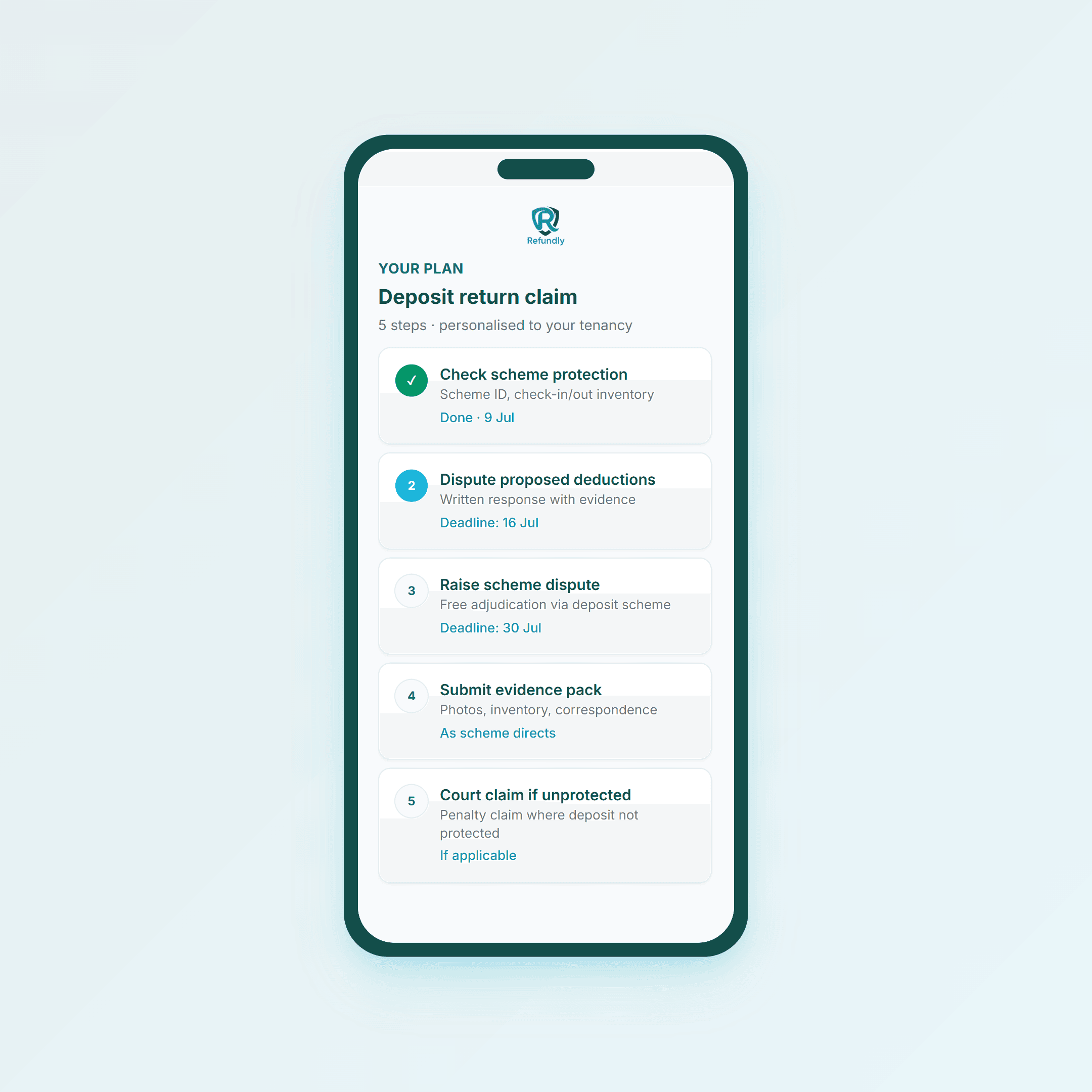 Track move-out date, deduction proposals, and scheme dispute deadlines
What to Do Next (High Level)
- Collect tenancy, inventory, deposit certificate, rent statements, move-out photos/video.
- Reply to proposed deductions in writing — accept only what is fair and evidenced.
- Ask for invoices, not vague “making good” figures.
- Open a scheme dispute if negotiation stalls.
- If unprotected, seek advice on reclaim and penalty routes promptly.
What Your Dispute Should Cover
Property and tenancy dates; deposit amount; deductions challenged; wear-and-tear vs damage points; inventory references; photos; amount you say should be returned.
 A calm, evidenced dispute pack works better than angry texts
Scheme Adjudication (High Level)
TDS, DPS, and MyDeposits offer adjudication when both sides engage. Decisions turn on evidence quality. Meet every scheme deadline; keep uploads organised.
Using Refundly
- Select housing / deposit return
- Protection and dispute framing in plain English
- Personalised plan
- Challenge letter
- Track scheme deadlines and replies
Final Tip
On move-out day, take a full video walkthrough with timestamps and keep the check-out report. That file often decides the adjudication.
General information for UK consumers only — not legal advice. England & Wales deposit protection rules apply to most ASTs — confirm via your scheme (TDS, DPS, or MyDeposits) and official housing guidance; Scotland and Northern Ireland differ.
Common questions
Short answers to common questions on this topic.
- Does my landlord have to protect my deposit?
- For most assured shorthold tenancies in England and Wales, yes — in a government-authorised scheme (such as TDS, DPS, or MyDeposits) within strict deadlines, with prescribed information given to you. Unprotected deposits can lead to penalties and other consequences.
- How do I start a deposit dispute?
- Try to agree deductions in writing first. If you cannot, raise a dispute through the protection scheme named on your certificate — free adjudication is available when the deposit is protected in a custodial or insured scheme process.
- What deductions are allowed?
- Typically proven rent arrears, damage beyond fair wear and tear, and sometimes contractually clear cleaning if the property was left below the check-in standard. Normal use and ageing are not “damage”.
- What if the deposit was never protected?
- You can still pursue return of the money and may have additional claims for breach of protection rules. Get advice quickly — deadlines and court routes matter.
- Scotland and Northern Ireland too?
- Deposit protection exists across the UK but schemes and procedures differ. Use your local scheme rules; the evidence habits below still help.