
In short (UK): Mobile exits depend on how you joined and whether you are still in a fixed term. Distance sign-ups often have a 14-day cooling-off. After that, expect early termination charges unless a strong service-failure or change-of-terms route applies. Use a PAC to keep your number; cancel in writing; challenge poor service and wrongful ongoing bills with evidence. This is general guidance, not legal advice.
Locked into a handset plan you no longer want — or living with coverage that never matched the pitch? This guide covers the core rules — not a full exit pack. For a personalised step by step action plan, deadline reminders and pre-filled letter templates, use Refundly.
First: How Did You Join?
| Sign-up method | Extra rules that often apply |
|---|---|
| Online / phone / distance | Cooling-off may apply |
| In store | Cooling-off weaker; contract + unfair terms still matter |
| SIM-only vs handset plan | Exit maths differs — check remaining device balance |
| Mid-contract upgrade | New minimum term may have restarted |
| Business vs consumer | Consumer rules are usually stronger |
Keep the written contract, order confirmation, and any coverage promises in the sales pitch.
Cooling-Off (Distance)
Often 14 days to cancel for any reason on qualifying distance contracts. Cancel in writing; refunds usually follow quickly; a reasonable charge for use or a returned handset condition may apply — not an inflated admin fee.
After Cooling-Off — Early Exit Fees
Expect written notice plus an early termination charge tied to remaining months (and sometimes outstanding handset cost). Terms may be challengeable if fees look punitive, traps were hidden, or the network keeps charging after a valid cancel. “No refunds ever” is not always the end for billing errors or serious non-supply.
When Refunds or Fee Waivers Are Stronger
Cooling-off; persistent inability to use the service as sold; mis-sold coverage or speed claims; mid-contract price/term changes that trigger exit rights; duplicate or post-cancel debits. Weaker: you simply want a cheaper deal mid-term with fair ETCs — though negotiation and switching still help.
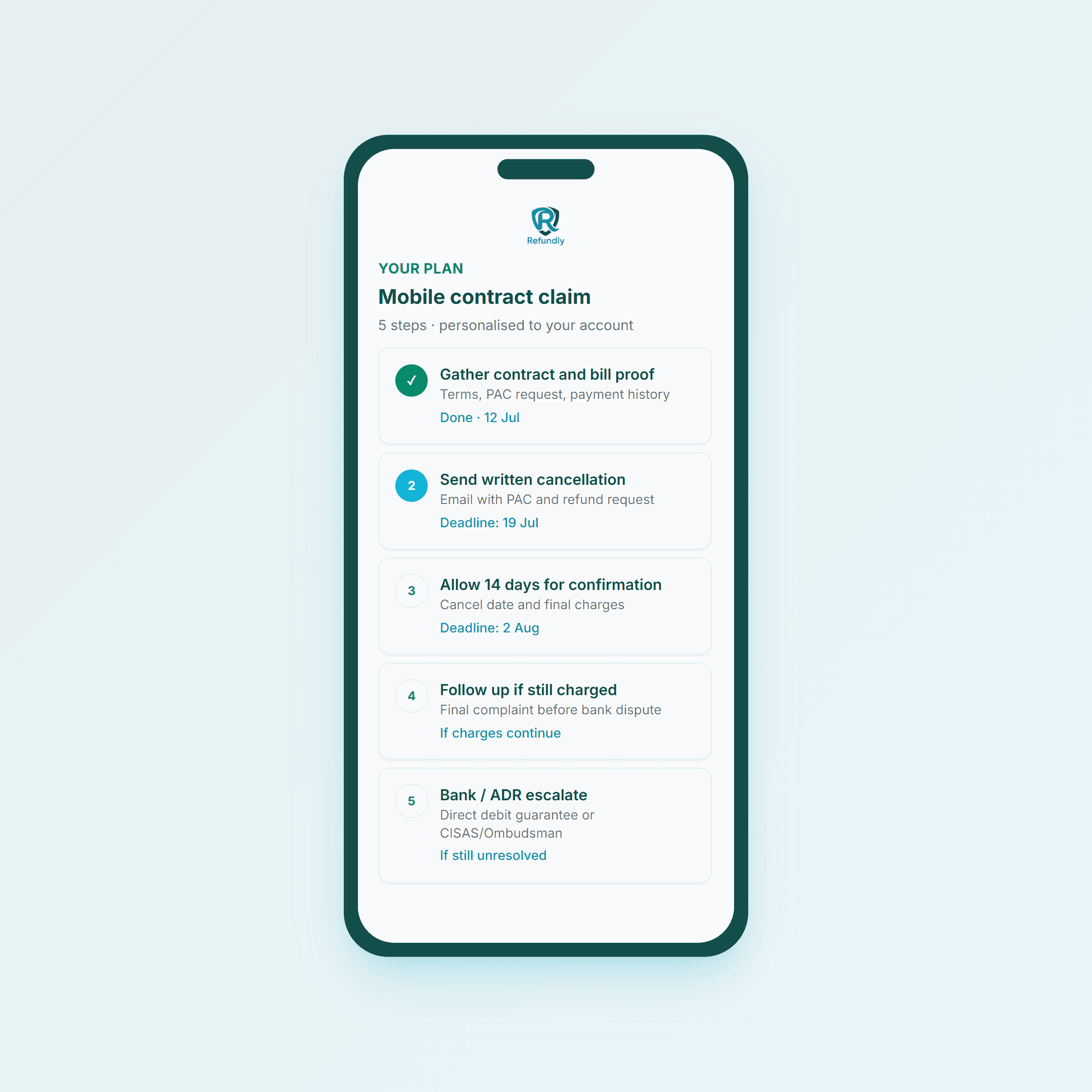 Track join date, cancel notice, PAC/switch date, and every direct debit
PAC Codes and Switching
- Ask for a PAC (keep number) or STAC (new number) from your current provider.
- Give it to the new network to switch.
- Switching does not automatically cancel an early exit bill — settle or challenge that separately.
- Confirm the effective end date of the old contract in writing.
What to Do Next (High Level)
- Collect contract, price, start date, handset details, coverage promises, bank statements.
- Cancel or complain in writing — do not rely on a shop chat alone.
- If switching, diary the PAC and port date.
- Challenge unfair ongoing charges after a valid cancel.
- Escalate unresolved service or billing disputes via the provider’s complaints process and ADR/Ofcom-style routes.
What Your Letter Should Cover
Account/mobile number; how/when you joined; cancel or complaint date; cooling-off, service-failure, or billing points relied on; PAC/switch details if relevant; exit fee or refunds challenged; deadline.
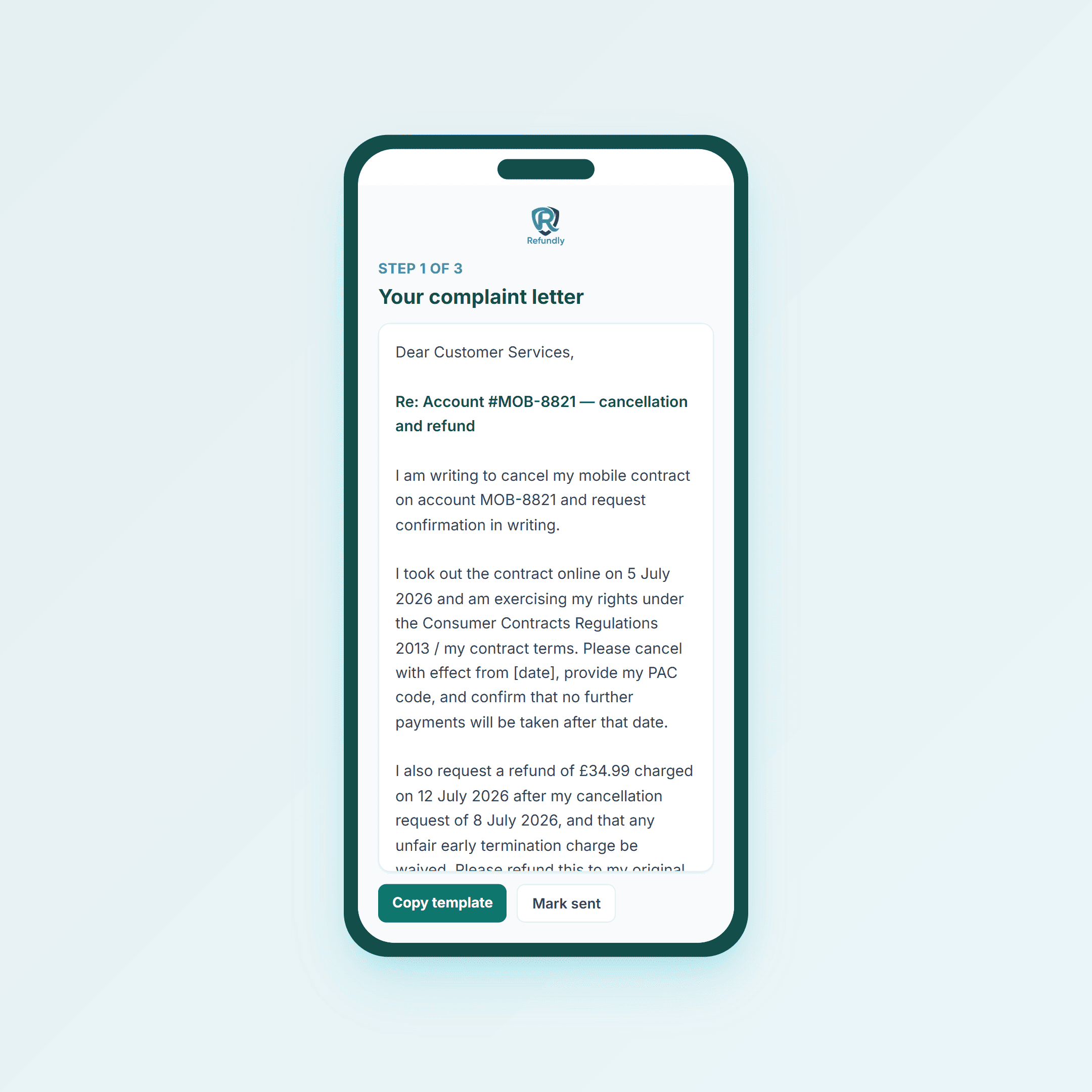 Written cancel + service complaints beat verbal shop promises
Escalation (Names Only)
Provider complaints process → approved ADR if deadlocked → Citizens Advice / Ofcom guidance → chargeback or Section 75 for clear mis-selling or non-supply on card payments → small claims for strong overcharge files.
Using Refundly
- Select subscriptions / telecom issue
- Rights based on sign-up method and contract type
- Personalised plan
- Cancellation or complaint letter
- Track charges, PAC dates, and replies
Final Tip
Write first, quote dates, keep bank and coverage evidence. Online joiners: check the 14-day clock before you accept an early exit quote.
General information for UK consumers only — not legal advice. See the Consumer Rights Act 2015, Consumer Contracts Regulations, and Ofcom consumer guidance.
Common questions
Short answers to common questions on this topic.
- Can I cancel a mobile phone contract within 14 days?
- Often yes if you signed up online, by phone, or away from a store — Consumer Contracts cooling-off may apply. In-store deals are weaker on cooling-off, but mis-selling and unfair terms can still matter.
- Do I always pay an early termination charge?
- After cooling-off, most fixed-term contracts charge an early exit fee based on remaining months. Check the written terms. Exit without (or with a reduced) fee can apply in limited cases — for example serious service failure or specific mid-contract change rights.
- What is a PAC code and when do I need one?
- A PAC lets you keep your number when switching networks. Ask your current provider; they must give it promptly. Switching does not by itself wipe an early exit fee if you leave a fixed term early.
- Can I get a refund for poor mobile service?
- Persistent outages, coverage far below what was sold, or billing errors can justify a complaint, goodwill credit, or stronger remedies. Document signal/data failures and raise it in writing before you assume “no refunds”.
- What if charges continue after I cancelled?
- Send a final written complaint with cancel date, PAC/switch date if relevant, and every debit. Then use bank tools and formal escalation. Refundly helps build the timeline and letter.